




Sourcing Vietnamese Ceramic Suppliers: A Complete Guide for Direct-to-Consumer Sellers
May 1, 2025 – 8 min read
The direct-to-consumer ceramic market is booming. Shopify stores, Etsy shops, and independent brands selling handmade and artisanal dinnerware, serving bowls, vases, and home décor pieces are capturing market share from traditional retail at double-digit growth rates. But scaling a DTC ceramics brand requires solving a fundamental challenge: sourcing reliable, quality-controlled suppliers who understand the demands of small-batch production, custom glazing, and the tight margins of online retail.
Vietnam has emerged as the go-to sourcing destination for DTC ceramic brands. With centuries of pottery tradition, factory clusters producing everything from minimalist tableware to hand-painted artisanal pieces, and a government invested in export-ready infrastructure, Vietnam offers DTC sellers what China increasingly cannot: flexibility, customization, quality oversight, and tariff efficiency. This guide walks you through identifying Vietnamese ceramic suppliers, scaling production, managing the unique logistics of fragile goods, and protecting margins as you grow from single-container orders to steady wholesale volumes.
Why Vietnam for Ceramics? Market Dynamics & Cost Reality
The Vietnamese ceramic industry is vast. Production centers cluster around Bat Trang (near Hanoi), Thanh Ha (central Vietnam), and Binh Duong (south), each specializing in different styles: traditional hand-painted wares, contemporary minimalist designs, and artisanal custom pieces. Unlike Chinese factories that operate at massive scale with rigid MOQs and long lead times, Vietnamese producers range from small family workshops weaving 500 units monthly to automated plants cranking out 50,000+ units. That flexibility is gold for DTC sellers.
On pricing, Vietnamese ceramics land 20-35% cheaper than Chinese equivalents at the same quality level. A hand-painted ceramic bowl that costs $8 landed from China might run $5.50-$6.00 from Vietnam. For a DTC seller moving 10,000 units annually, that’s $15,000-$25,000 in margin recovery—funds you can reinvest in marketing, packaging, or product development. Add the 20% U.S. tariff on China versus minimal tariffs on Vietnam, and the math becomes even more compelling.
Lead times from Vietnam typically run 60-80 days (production + ocean freight), comparable to or better than China depending on where you’re sourcing. And the real advantage: Vietnamese suppliers are hungry for consistent, long-term partnerships. They’ll work with you on color variations, glaze experiments, and custom sizing in ways Chinese factories view as inefficient.
Understanding Vietnamese Ceramic Categories
Vietnam produces ceramics across a spectrum of styles, price points, and production methods. Understanding the differences helps you match suppliers to your brand positioning:
Artisanal Hand-Painted: Traditional Vietnamese ceramics, often featuring blue-and-white or multi-color patterns inspired by historical designs. Hand-painted by artisans in village workshops. Labor-intensive but distinctive. Cost: $3-$8 per unit wholesale depending on complexity. Lead time: 75-90 days. Best for: Premium DTC brands, etsy sellers, niche markets valuing craft heritage.
Contemporary Minimalist: Clean lines, solid glazes, modern aesthetic. Often produced in semi-automated factories. High-quality finishes, consistent color matching, food-safe glazes. Cost: $1.50-$4 per unit wholesale. Lead time: 60-75 days. Best for: Mainstream DTC, Shopify stores, brands targeting younger demographics.
Textured & Matte Finish: Raised patterns, reactive glazes, artisanal-looking pieces that command premium pricing. Blend of hand and machine production. Cost: $2.50-$6 per unit wholesale. Lead time: 70-85 days. Best for: High-end DTC, gift markets, lifestyle brands.
Custom & Private Label: Suppliers willing to create bespoke designs, custom colors, and branded packaging. Requires higher MOQs (500-1,000+ units) but allows full differentiation. Cost: $2-$5+ per unit (depends on customization). Lead time: 85-120 days. Best for: Established DTC brands scaling production.
DTC sellers tapping Vietnamese suppliers unlock margin and competitive advantage
The Sourcing Process: Five Steps from Supplier ID to First Order
Step 1: Define Your Product Spec & Target Cost
Before contacting a single supplier, lock down exactly what you need. Create a detailed product specification including dimensions, weight, glaze type (glossy, matte, reactive), color requirements, food-safety certifications needed, and target cost. Be specific: “8-inch diameter hand-painted ceramic bowl, reactive blue glaze, dishwasher-safe, $3.50 landed cost max.”
For DTC sellers, food-safety compliance is non-negotiable. U.S. FDA regulations require that ceramic dinnerware be tested for lead and cadmium leaching. Most reputable Vietnamese factories conduct these tests automatically and provide certificates. Ask upfront: Does the factory test all batches? What certifications do they hold (FDA, CE, BSCI)? Can they provide test reports?
Also clarify packaging. Ceramics are fragile—shipping damage directly impacts your return rate and brand reputation. Ask: Can the supplier provide individual foam-wrapped packaging? Multi-wall carton protection? Stackable design to maximize container density? These details affect your landed cost and customer satisfaction equally.
Step 2: Identify Supplier Candidates
Finding Vietnamese ceramic suppliers starts with targeted searching. Industry directories (TradeKey, Global Sources, Alibaba) list hundreds of ceramic factories. Narrow your search by location (Bat Trang, Thanh Ha) and production method (hand-painted, minimalist, custom).
When you identify candidates, request a supplier profile including: factory capacity (units/month), production methods (hand vs. machine), certifications (FDA, CE, BSCI), previous export customers, and price quotes for your specific product. Request photos of comparable products already in their portfolio.
Cross-reference on social media and industry forums. DTC sellers talk openly about suppliers on Reddit, Facebook groups, and Slack communities. A factory with a strong reputation among small sellers is worth its weight.
Step 3: Request Samples & Evaluate Quality
Once you’ve identified 3-4 strong candidates, request paid samples. Specify exact dimensions, glaze, color, and packaging. Pay the sample fee ($50-$150 per piece)—it’s a sign of seriousness and prevents tire-kickers.
When samples arrive, evaluate rigorously:
- Glaze finish: Smooth, no drips or runs. Colors match your reference (if provided). No visible defects.
- Dimensional accuracy: Measure diameter, height, and wall thickness against specs. Tolerance should be ±2mm for items under 30cm.
- Weight & feel: Does it feel premium? Is the base glazed or raw? (Glazed bases prevent scratching countertops.)
- Food-safety documentation: Ask for copies of FDA or third-party lead/cadmium test reports. If unavailable, that’s a red flag.
- Packaging: Is it protective enough for international shipping? Can you open and reseal without damage?
- Packaging cost: Ask the supplier to itemize packaging cost per unit. For DTC sellers, this directly impacts margin.
Test samples aggressively: microwave them, dishwasher them, drop them (gently). Real-world stress testing beats visual inspection alone.
Step 4: Conduct Virtual Factory Audits & Lock Terms
Schedule a factory audit—ideally in person, but Zoom tours with the factory owner/QA manager work for DTC sellers. During the audit, assess:
- Production workflow: How does clay enter? Is it mixed on-site or sourced externally? How is glazing applied (hand-dipped, spray, immersion)? What’s the kiln capacity and firing schedule?
- Quality control: Do they measure finished pieces against specs? Are there rejection/rework rates? How do they handle defects?
- Food-safety processes: If producing dinnerware, what glaze formulations do they use? Can they provide batch test reports?
- Capacity & timeline: Can they handle your projected volumes? What’s their lead time for larger orders?
- Customization ability: Can they mix colors, adjust glaze density, or create custom designs? What’s the MOQ for custom work?
Once satisfied, negotiate terms: pricing, MOQ, lead time, payment terms (most Vietnamese ceramics suppliers accept 30% deposit + 70% on shipment), and what happens if quality falls short (defect allowance, rework policy).
Step 5: Pilot Order & Quality Locks
Before scaling, run a pilot order—enough to test production quality, packaging, shipping, and customer response. For a DTC seller, that might be 500-2,000 units. A pilot order lets you validate the supplier’s consistency, test your supply chain (customs, drayage, warehouse storage), and confirm customer satisfaction before committing to 10,000+ unit annual volumes.
Before production begins, freeze specifications with a golden sample—a reference piece that defines acceptable quality. Document color, glaze finish, weight, and packaging. Both you and the supplier sign off. During production, request inline photos at 25%, 50%, and 75% completion. Before shipment, hire a third-party inspector to audit 5-10% of the order (checking for chips, cracks, glaze defects, and proper packaging). Pre-shipment inspection costs $300-$500 but prevents costly returns and protects your reputation.
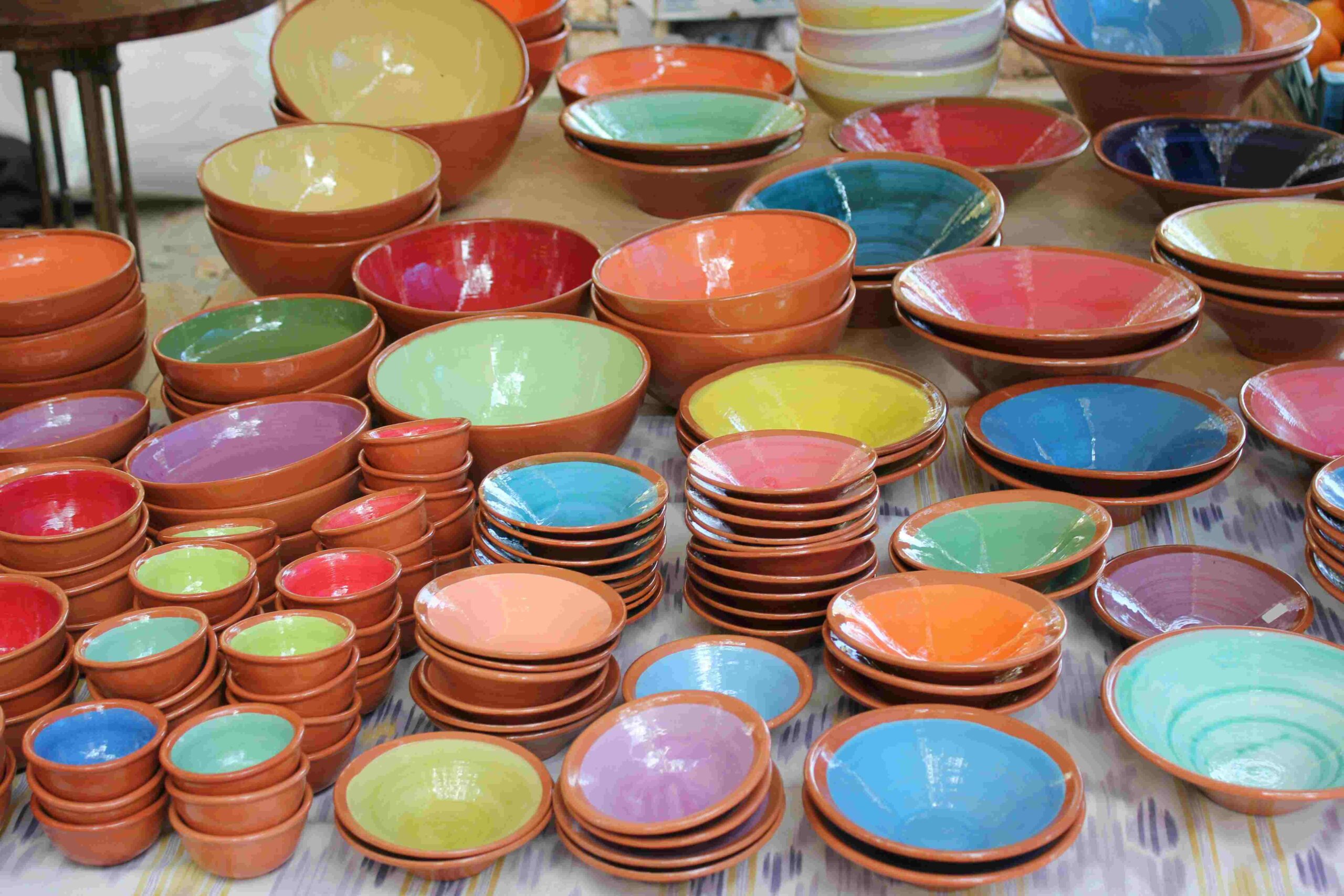
Vietnamese ceramics offer artisanal quality at DTC-friendly price points
Compliance & Certifications for DTC Food-Contact Ceramics
FDA Lead & Cadmium Testing: Non-negotiable for dinnerware. U.S. FDA regulations limit lead to 0.1 ppm (parts per million) and cadmium to 0.05 ppm in ceramic dinnerware. Most Vietnamese factories test batches and provide compliance certificates. Ask for third-party lab testing—don’t rely solely on factory claims. Cost: $200-$400 per test, often amortized across large orders.
CE Marking (Europe): If selling to EU customers, ceramics must comply with CE standards. Most factories producing for Western export already hold CE certification. Verify before ordering.
BSCI Labor Audits: If your DTC brand markets sustainability or ethical sourcing, BSCI audits confirm fair labor practices. Vietnam’s ceramic industry increasingly holds BSCI status. It adds credibility and justifies premium pricing.
Food-Safe Glazes: Ask suppliers to confirm all glazes are food-safe (no toxic pigments). Low-lead or lead-free formulations are standard in Vietnam’s export sector but worth confirming.
Real Case Study: Shopify Store Scales from 1,000 to 25,000 Units Annually
A Portland, Oregon-based Shopify store, “Clay & Co.,” started selling artisanal ceramic dinnerware sets (dinner plate, salad plate, bowl, mug) sourced from a local potter. Handmade, premium, but limited to ~80 sets monthly due to production constraints and $800 wholesale cost per set. Retail price: $3,200 per 4-piece set. Margins were healthy but growth was capped.
In Q1 2025, the founder decided to scale. She partnered with Vietnam Direct Sourcing to identify suppliers capable of producing the same aesthetic—artisanal hand-painted designs, matte reactive glazes—at industrial scale. We identified a family workshop in Thanh Ha with 20 years exporting to Scandinavian home décor brands. Their portfolio matched her vision perfectly: minimalist forms, reactive blue/green glazes, 100% hand-finished.
Supplier specifications: 4-piece dinnerware set (10″ dinner plate, 8″ salad plate, 6″ bowl, 12oz mug), hand-painted reactive glaze, dishwasher-safe, FDA-compliant, individually foam-wrapped in protective carton. Target cost: $120/set (vs. $800 handmade locally).
Pilot order: 1,000 sets (4,000 individual pieces). Timeline: Sampling (3 weeks) → negotiation (2 weeks) → production (8 weeks) → ocean freight (4 weeks) = 17 weeks total. Cost: $120,000 + sample fees, inspection, and freight (~$135,000 all-in).
Quality was exceptional. FDA food-safety tests passed. Packaging protected pieces perfectly—zero breakage on arrival. Within 60 days, Clay & Co. sold the entire pilot order on Shopify at $1,400 per 4-piece set, yielding ~$350,000 in gross revenue and $280,000 in gross profit (after COGS, packaging, fulfillment).
Emboldened, she committed to 20,000 units annually (5,000 sets), locked in a $115/set price (volume discount), and negotiated 60-day payment terms. Year 1 revenue: ~$7 million at the same 4-piece set retail price. The supplier became her strategic partner, even collaborating on a limited-edition glaze variation exclusive to Clay & Co.
Key lesson: Vietnamese ceramic suppliers don’t just manufacture—they partner. When you demonstrate commitment (consistent volumes, fair pricing, long-term vision), they invest in your success with better pricing, faster lead times, and genuine product collaboration.
Logistics, Packaging & Handling for Fragile Goods
Shipping & Packaging: Ceramics are fragile. Invest in protective packaging upfront. Best practice: individual foam sleeve → corrugated carton with interior cardboard dividers → outer multi-wall carton with dunnage. Cost: $1.50-$3.50 per piece depending on size and customization. For a DTC seller, this is non-negotiable—returns due to damage destroy margins and reputation.
Ask suppliers to provide individual packaging that’s also branded (your logo, tissue paper, thank-you card). Unboxing experience matters for DTC—premium packaging justifies price and encourages social media sharing.
Ocean Freight & Consolidation: Most Vietnamese ceramic factories arrange LCL (less-than-container load) consolidation from Ho Chi Minh City or Hai Phong to U.S. West Coast ports. A 40-foot container costs $1,500-$2,200 depending on season. Lead time from factory to U.S. warehouse: 25-30 days ocean transit + 5-10 days inland drayage/customs. Plan for 35-40 days from port to your warehouse.
Landed Cost Breakdown (8-inch ceramic bowl, $2.50 factory price):
- Factory price (ex-works): $2.50
- Individual foam + carton packaging: $0.80
- Inland transport to port: $0.10
- Ocean freight (per unit, amortized over 10,000 units): $0.35
- U.S. tariff (0% on Vietnam): $0.00
- Drayage & customs clearance: $0.15
- Insurance & contingency: $0.10
- Total landed cost: $3.90
Warehouse & Inventory: Ceramics require careful storage—humidity and temperature fluctuations can cause cracks. Store in climate-controlled warehouses (50-55% relative humidity, 18-22°C). Many DTC sellers partner with third-party logistics (3PL) providers who handle this automatically. Budget $0.50-$1.00 per unit monthly for storage depending on warehouse location and volume.
Common Pitfalls & How to Avoid Them
Glaze inconsistency across batches: Hand-painted ceramics naturally vary. One batch’s blue might be slightly darker than the next. Solution: Specify color tolerance upfront (provide a Pantone or RGB reference). Request samples from each production batch. For DTC, slight variations can actually be a selling point (“each piece is unique”).
Shipping damage: Ceramics break in transit if packaging is inadequate. Solution: Conduct drop tests during pilot order. Require suppliers to use multi-wall cartons with interior foam. Consider insurance for large shipments.
Capacity mismatches: You commit to 10,000 units, but the supplier can only produce 5,000 monthly, delaying fulfillment. Solution: Confirm production capacity upfront and get it in writing. Build a 60-day buffer into your sales forecasts.
Quality degradation at scale: The pilot order is perfect, but Batch 2 has 5% defect rate. Solution: Lock quality standards with a golden sample. Require inline inspections during production. Maintain a defect allowance clause in your contract (e.g., 2% acceptable defect rate; anything above triggers rework).
Inventory pileup: You order 5,000 units but only sell 2,000 monthly. Cash ties up in inventory, warehouse costs skyrocket. Solution: Start with smaller pilot orders. Use sales data to forecast accurately before scaling. Many suppliers offer flexible payment terms if you commit to consistent monthly volumes.
Import surprises: Unexpected tariffs, customs delays, or documentation issues delay shipment. Solution: Work with a freight forwarder experienced in ceramic imports. Confirm all documentation (commercial invoice, packing list, certificates of origin) before shipment.
Scaling Your DTC Brand: From Pilot to Consistent Supply
Once your pilot order succeeds and customer feedback is positive, scale strategically:
- Lock pricing & volume commitments: Commit to 12-month volume forecasts (even in ranges: “2,000-3,000 units monthly”). Suppliers reward commitment with better pricing and priority production slots.
- Diversify offerings: Introduce complementary products (larger serving bowls, vases, mugs) from the same supplier. Consolidate shipments to reduce freight cost per unit.
- Invest in packaging: Custom-branded boxes and tissue paper are expensive at small volumes but justify premium pricing and brand differentiation at scale.
- Develop seasonal products: Work with suppliers on limited-edition glazes or shapes tied to seasons or holidays. Creates urgency and repeat purchases.
- Build relationships: Visit the factory in person if possible. Share sales data, customer feedback, and future plans. Suppliers who see themselves as partners, not vendors, go the extra mile.
- Plan for redundancy: As volumes grow, consider a secondary supplier for specific products. It reduces risk if your primary supplier faces capacity issues or quality problems.
Getting Started: Your Action Plan
Ready to source Vietnamese ceramics for your DTC brand? Here’s your roadmap:
- Define your product spec: Dimensions, glaze, color, target cost, packaging requirements, and certifications needed.
- Identify 4-5 supplier candidates: Use trade directories and peer networks. Request profiles and sample pricing.
- Order paid samples from 3 top candidates: Evaluate quality, packaging, and cost structure.
- Conduct virtual factory audits: Assess production capability, quality control, and cultural fit.
- Run a pilot order: 500-2,000 units to test production, packaging, shipping, and customer response.
- Iterate based on feedback: Refine glaze, packaging, or dimensions based on customer reviews and handling experience.
- Commit to consistent volumes: Once pilot succeeds, lock in 12-month forecasts and negotiate better pricing.
- Scale intelligently: Add complementary products, seasonal variations, and branded packaging as volumes grow.
Vietnamese ceramic suppliers are hungry for partnerships with DTC brands that value quality and consistency. By moving strategically—specs first, samples second, audits third—you can build a sustainable sourcing relationship that gives you competitive advantage, margin protection, and the freedom to scale your brand without compromising quality or values.
The DTC ceramic market is no longer a cottage industry. It’s a multi-billion-dollar space where brands that move fast and source smart capture outsized margins and loyal customers. Vietnam is ready to be your manufacturing backbone. The question is: are you ready to scale?
Tags: Vietnamese ceramic suppliers | Source ceramics Vietnam | DTC dinnerware | Shopify ceramics | Artisanal ceramic sourcing