





The 2026 Vietnam Sourcing Roadmap: 12-Month Execution Plan Before Capacity & Energy Constraints Tighten
The 2026 Vietnam Sourcing Roadmap: 12-Month Execution Plan Before Capacity & Energy Constraints Tighten
May 1 2026 – 14 min read
Five months of analysis. Five critical market dynamics. One undeniable conclusion: 2026 is the year to lock in Vietnam sourcing before structural constraints tighten permanently.
Energy costs are rising globally. Port capacity is filling. Lead times are extending. Labor costs are accelerating. Tariff windows are closing. The window for decisive action closes in six months.
This article synthesizes everything into a month-by-month execution roadmap. By December 2026, importers who execute will have locked in sustainable Vietnam supply chains protecting margins through 2028. By Q1 2027, competitors who delayed will find factories at full capacity, lead times at 90+ days, and prices up 15-20%.
Why This Roadmap Matters Now
Over five months, we’ve documented five structural shifts in Vietnam sourcing:
January (2026 Outlook): Energy crisis created temporary pricing vulnerability. Factories are desperate for volume = negotiation opportunity window.
February (Flat-Pack Furniture): RTA furniture from Vietnam cuts landed costs 40-50% vs. assembled imports. Capacity is available now; will fill by Q4 as importers recognize the arbitrage.
March (Energy Resilience): Vietnam’s renewable capacity is coming online Q4 2026. Manufacturing costs will normalize post-Q4, declining 15-20%. Importers locking contracts now at June 2026 pricing benefit when renewable capacity brings costs down.
April (Tariff Shift): 150% import growth from Vietnam vs. flat China imports proves tariff advantage is structural and durable. But tariff window could close if transshipment tariffs imposed—Section 301 hearings are defining this risk.
May (Australia Strategy): AANZFTA duty-free access + 5-6 day shipping demonstrates what regional tariff advantage looks like. Vietnam-Australia trade grew 388% in 15 years. This is the template other markets are following.
What happens if you delay? By Q4 2026: Factories at full capacity, unwilling to negotiate. Lead times extended to 70-90 days. Labor costs up 8-12% YoY. Port congestion adding 15-30 days. Competitors who locked in 12-month contracts will have margin protection; latecomers absorb 15-20% cost increases.
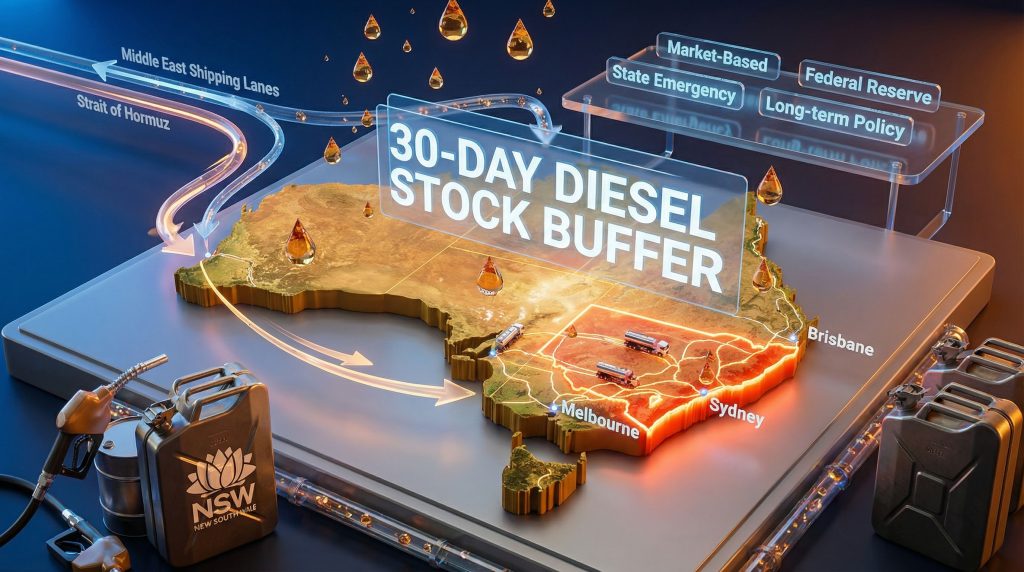
Figure 1: Australia’s 30-day energy buffer shows supply chain resilience. Global energy constraints impact manufacturing and shipping—understanding these dynamics shapes sourcing strategy.
The 12-Month Roadmap: Phase-by-Phase Execution
PHASE 1: ASSESSMENT & STRATEGY (June-July 2026) — 8 Weeks
Week 1-2: Category & Cost Audit
Inventory current supply portfolio. For each major category: current sourcing country, landed cost (including tariffs), lead time, quality metrics. Identify top 3-5 categories where Vietnam advantage is highest.
Best fit for Vietnam: Footwear (40-50% cost savings vs. China), Furniture/RTA (45-55%), Apparel (30-40%), Electronics components (25-35%). Lower priority: Chemicals, industrial machinery, precision optics.
Calculate tariff impact. China on apparel: 25% base tariff + 15% on fabric inputs = 40% total tax. Vietnam on apparel: 6% base + 2% on fabric = 8% total. That 32% gap is your margin opportunity. For Australia-focused importers: AANZFTA eliminates tariffs entirely on most categories, creating 40%+ advantage over China.
Week 3-4: Regional Strategy Decision
Vietnam’s tariff advantage varies by destination. Align your sourcing strategy to your market:
Australia/NZ importers: Prioritize AANZFTA-eligible categories (footwear, apparel, furniture, food, electronics). Zero/near-zero tariffs provide 40%+ advantage over China. 5-6 day shipping to Sydney enables dropship models. Regional fulfillment centers (Sydney/Melbourne) unlock inventory efficiency.
North American importers: Prioritize where 20% Vietnam tariff beats 35% China tariff by 15+ percentage points. Focus on mass-market categories where tariff savings drive retail pricing. Tariff unpredictability (Section 301 risk) requires 12-month contract lock-in by September.
EU importers: Vietnam-EU FTA provides preferential access. Focus labor-intensive goods (apparel, footwear) where tariff advantage is greatest. Consider sourcing from Da Nang (closer to EU shipping routes than HCMC).
Week 5-6: Supplier Research
Identify 5-8 potential Vietnam manufacturers for priority categories. Vet using criteria:
• Established operation (5+ years, not startup scaling); • Capacity available (45-50 day lead time achievable, not overbooked); • Quality certified (ISO 9001 minimum, category-specific if required); • Current references from 2+ customers; • English-fluent communication, responsive within 12 hours.
Week 7-8: Cost Modeling & ROI Analysis
Request detailed quotes from 3 finalists for each category. Model landed costs with tariffs, freight, inspection. Compare to current supplier. Target: 15-25% landed cost reduction. If achieving less than 15%, Vietnam advantage may not offset operational complexity and risk.
PHASE 2: PILOT & VALIDATION (August-September 2026) — 8 Weeks
Week 9-10: Pilot Orders
Place small pilot orders with 2-3 shortlisted suppliers: 100-300 units per SKU. Goals: validate quality, test lead times, assess communication, measure actual landed costs, validate tariff classification with customs.
For regional strategies: Test market-specific logistics. For Australia: order mid-week, measure factory fulfillment time, vessel departure, Sydney arrival, domestic delivery. Target: 8-12 days door-to-door. For North America: measure West Coast port arrival time. For EU: measure arrival at major ports (Rotterdam, Hamburg).
Week 11-12: Quality Audits & Customs Validation
On arrival, measure defect rates. Target: <1.5% for established suppliers. If >2%, escalate to quality discussion or drop supplier. Work with customs broker to validate tariff classification. Ensure AANZFTA documentation (for Australia), USMCA compliance (for North America), or EU preferential treatment documentation.
Week 13-14: Factory Site Visits (Recommended)
Visit 1-2 finalist factories. Assess: equipment condition, worker safety, inventory management, scheduling capability. Red flags: cramped workspace, disorganized inventory, vague on capacity. Green flags: modern equipment, clear scheduling, references from recognizable brands.
Request written confirmation: Can they maintain 45-50 day lead time through December? Do they have energy resilience (solar, backup power) if grid constraints intensify? For Australia importers: Can they accommodate weekly replenishment orders?
Week 15-16: Contract Negotiation
Begin negotiating 12-24 month supply agreements with best-performing suppliers. Negotiation leverage is highest NOW (June-July). Factories are still available. By September, they’ll be fully booked. Your negotiation message: “Commit 12-month volume + fixed price and we sign now. Wait until October and we’ll source elsewhere.”

Figure 2: Global refinery utilization at 84%+. Energy costs remain elevated through Q4 2026. Lock in Vietnam contracts now before renewable capacity drives cost normalization.
PHASE 3: CONTRACT LOCK-IN (October-November 2026) — 8 Weeks
Week 17-18: Finalize 12-24 Month Agreements
Sign contracts with 2-3 Vietnam suppliers for each priority category. Key commercial terms:
• Fixed FOB price with annual escalation ≤5%; • Guaranteed lead time (45-50 days, penalty clause for delays); • Quality targets (<1.5% defect rate); • Minimum volume commitments; • Right to audit production; • Force majeure clause (energy crisis, port strike, tariff change).
Region-specific contract language:
Australia importers: Specify AANZFTA compliance. Language: “Goods wholly produced in Vietnam or regional value content >60% per AANZFTA Annex 1.” Supplier must provide origin certificates for customs claim.
North America importers: Include tariff change clause. If Section 301 transshipment tariffs imposed: “Either party may terminate contract, or supplier agrees to reduce FOB by equivalent tariff amount to maintain landed cost.” Protects you if tariff environment changes.
EU importers: Ensure Vietnam-EU FTA compliance documentation. Specify Da Nang shipment preference (shorter to EU).
Week 19-20: Logistics Partnership & Distribution Strategy
Establish logistics partnerships aligned to your market:
Australia: Identify regional fulfillment centers (Sydney, Melbourne). Negotiate weekly replenishment from Vietnam. Target: $0.50-1.00/unit freight.
North America: Consolidate shipments at California/Texas ports. Negotiate weekly trucking to regional distribution centers. Or dropship directly to end customers for fast-moving categories (furniture, footwear).
EU: Establish bonded warehouse at Rotterdam or Hamburg. Consolidate shipments, then distribute across EU.
Week 21-24: Systems Integration & Team Training
Integrate Vietnam suppliers into procurement systems. Train team on new suppliers, order protocols, escalation procedures. Establish performance dashboards: lead time attainment, quality performance, cost variance.
PHASE 4: SCALE & OPTIMIZE (December 2026 – June 2027) — 6 Months
Months 13-15 (Dec 2026 – Feb 2027): Ramp & Monitor
Scale volume with locked-in suppliers. By February 2027, Vietnam should represent 30-40% of sourcing for targeted categories. Monitor: cost actuals vs. projections, lead time performance, quality consistency.
Expected cost outcome: 15-20% landed cost reduction. Vietnam’s renewable energy capacity coming online → manufacturing input costs decline Q1 2027.
Months 16-18 (Mar-May 2027): Scale to 50-60%
Scale Vietnam sourcing to 50-60% of targeted categories. Reduce China/other source dependencies. Reinvest cost savings into marketing, margin expansion, or customer acquisition.
Expected outcome: Energy costs normalize as renewable capacity reaches 30%+ of Vietnam grid. Manufacturing costs stabilize. Your 12-24 month contracts lock you in at June 2026 pricing while market normalizes.
Risk Checkpoint (June 2027): Evaluate supplier performance. Top performers: expand volume, consider 24-month renewal contracts. Underperformers: plan transition to backup suppliers during contract wind-down.
The Energy Cost Timeline: Why NOW Matters
Vietnam imports 90% of its crude oil. Global energy prices spiked 30-50% in late 2025 due to Middle East conflict and supply constraints. Manufacturing input costs jumped 12-18% peak-to-peak in Q1 2026.
But Vietnam’s renewable capacity (solar + wind) is coming online Q4 2026. By December 2026, grid energy costs will decline as solar and wind reach 10-12% of generation. By June 2027, renewables at 14-16%. Manufacturing input costs will normalize down 15-20% from peak.
Importers who lock 12-month contracts in June-October 2026 at current pricing will capture this benefit:
• June 2026: Lock Vietnam supplier price at $X FOB; • October-December 2026: Renewable capacity comes online, manufacturer’s input costs drop 15-20%; • January 2027 onward: Your locked contract protects you at June pricing while competitors sourcing spot (due to delayed contract signing) face higher costs.
Delay contract signing past September and you face capacity shortage + elevated pricing through 2027.
Figure 3: The execution roadmap is a 12-month journey. Start now (June). Reach destination by December. Competitors who delay will be left behind.
Bottom Line: Six Months to Transform Your Supply Chain
The window is open. Port capacity is available. Factory pricing is vulnerable to negotiation. Tariff advantages are documented. Lead times are reasonable. Energy costs are peaking.
By December 2026, importers who execute this roadmap will have locked in sustainable Vietnam supply chains protecting margins through 2028. Competitors who delay will find factories fully booked, lead times extended to 90+ days, and pricing elevated 15-20%.
You have six months to act. Follow this roadmap month-by-month. Don’t delay beyond September—that’s when capacity fills and negotiation leverage disappears.
The 2026 Vietnam sourcing window is closing. Make your move now.
Ready to execute this 12-month roadmap? Vietnam Direct Sourcing guides importers through this exact execution pathway across all markets. We conduct category audits, identify quality-vetted suppliers, negotiate contracts, manage pilot programs, and coordinate regional logistics—Australia, North America, EU, and beyond. We understand the timing window, the energy dynamics, the capacity constraints. We help you lock in competitive advantage before competitors realize the window is closing.
Connect with us to execute your 2026 Vietnam sourcing roadmap. The window closes in 6 months.
Tags: vietnam sourcing 2026 roadmap | supply chain execution | tariff strategy | manufacturing cost optimization | energy resilience sourcing | supplier negotiation | global import strategy | capacity constraint 2026
Learn more about this topic on our podcast!
Want to dive deeper into this subject? Check out our latest podcast on this subject on Spotify, where we explore this topic and so much more! Whether you're on the go or relaxing at home, tune in for insights, tips, and discussions that bring our blog topics to life.




Australia’s Vietnam Sourcing Secret: AANZFTA Duty-Free Access & 388% Growth in 15 Years

Leave a comment
Your email address will not be published. Required fields are marked *