




The AANZFTA Upgrade: What Changed for Vietnam–Australia Trade in 2025
July 2026 – 9 min read
If you import from Vietnam into Australia or New Zealand, the rulebook you rely on quietly got an upgrade in 2025 — and most buyers have not updated their paperwork to match. The Second Protocol to AANZFTA, the agreement that gives Vietnamese goods duty-free access to Australia, entered into force generally on 21 April 2025 and specifically for Vietnam on 22 August 2025. It is the first major refresh of the agreement in over a decade, and it changes how origin is proved, adds brand-new chapters, and creates fresh opportunities for smaller importers.
This is a plain-English walkthrough of what actually changed, what it means for your compliance documents, and what to do about it. No legalese — just the parts that touch your landed cost and your customs paperwork.
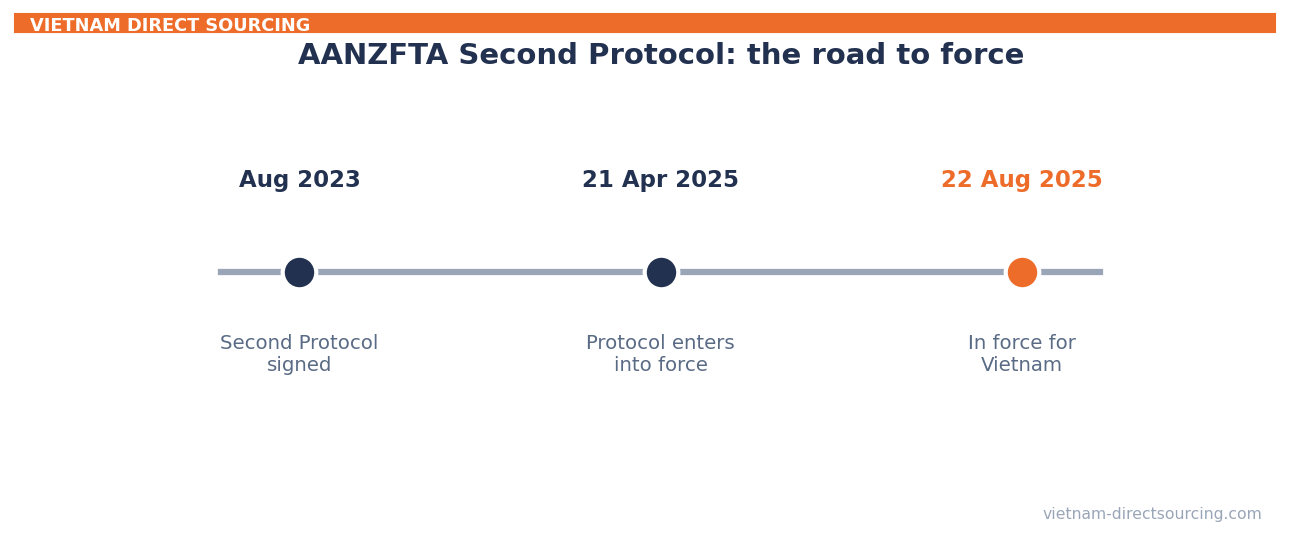
Figure 1: The Second Protocol was signed in 2023, entered into force in April 2025, and took effect for Vietnam on 22 August 2025.
What the Second Protocol is, in one paragraph
AANZFTA has connected the ten ASEAN nations with Australia and New Zealand since 2010. Over time it started to look dated next to newer deals like the CPTPP and RCEP. The Second Protocol is the modernisation: it upgrades 13 existing chapters and adds three entirely new ones, bringing the agreement in line with how supply chains, small businesses, and digital trade actually work in the 2020s. For Vietnam–Australia traders, it is the same duty-free backbone with smoother plumbing — and, importantly, a new way to prove origin.
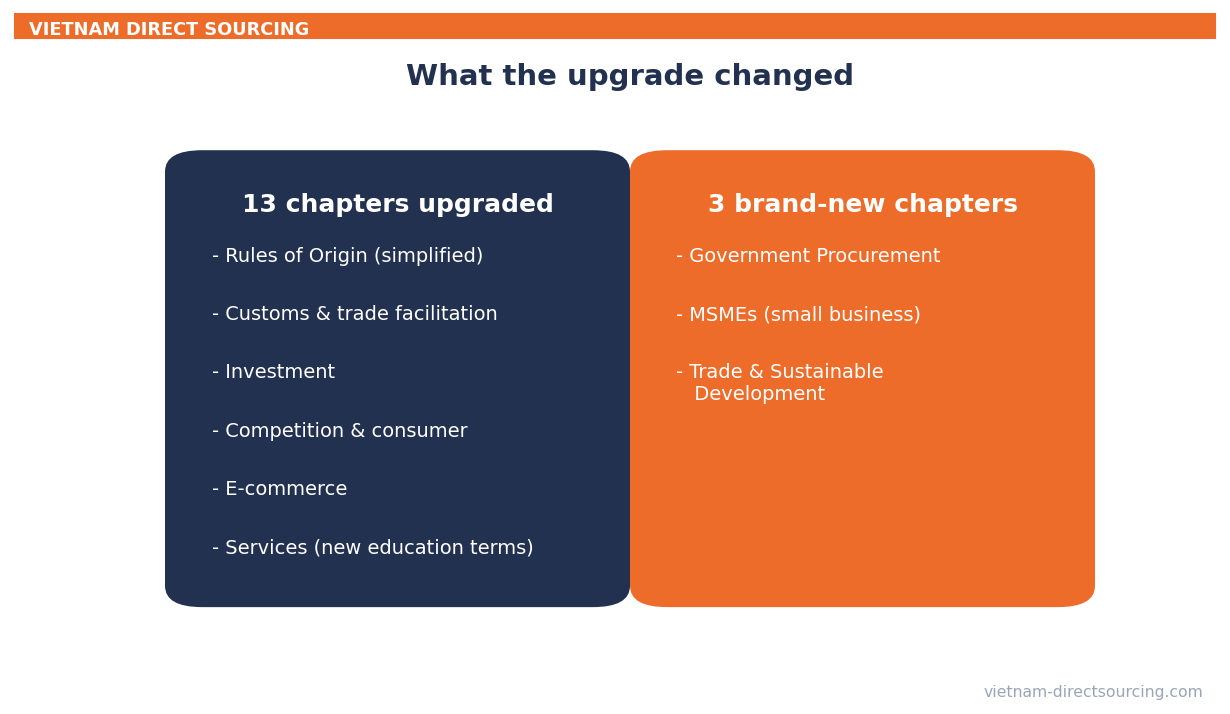
Figure 2: The upgrade refreshed 13 existing chapters and introduced three new ones — Government Procurement, MSMEs, and Trade & Sustainable Development.
Change 1: Simpler, more modern rules of origin
The first headline for importers is the refreshed Rules of Origin chapter (AANZFTA Chapter 3, as amended by the Second Protocol). AANZFTA still uses the familiar tests — a Regional Value Content of 40% of FOB value, or a Change in Tariff Classification — but the Second Protocol modernises the surrounding process: clearer product-specific rules, updated tariff nomenclature aligned to the current Harmonized System, and streamlined origin procedures that reduce ambiguity about what qualifies.
Why it matters: fewer grey areas mean fewer rejected claims. Products that previously sat in an uncertain zone now have clearer criteria, which lowers the risk that an Australian customs review disallows your preferential rate after the fact. This is exactly the kind of detail to confirm with your factory now, against your product’s HS classification and the applicable product-specific rule.
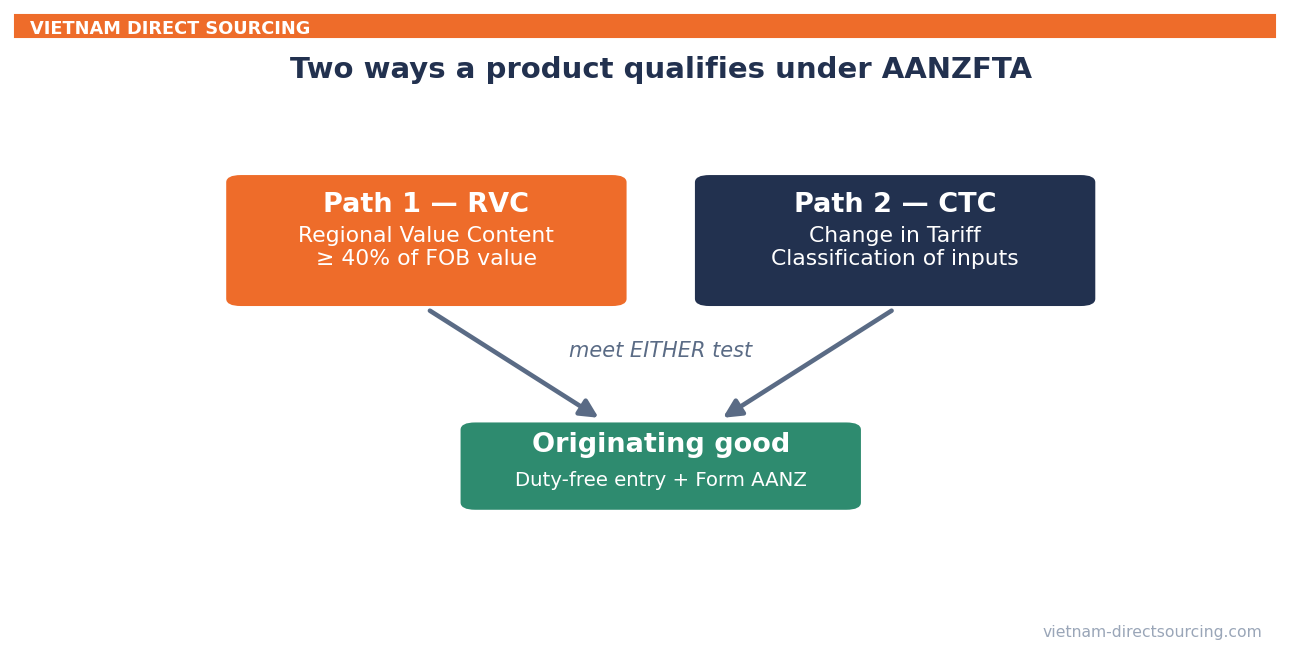
Figure 3: Origin still turns on two familiar tests — meet either the 40% RVC threshold or the change-in-tariff-classification rule and the good qualifies for duty-free entry.
Change 2: A new way to prove origin
This is the change most likely to affect your paperwork, and the one most buyers have missed. Until recently, AANZFTA preference could be claimed only with an issued Certificate of Origin (Form AANZ). The Second Protocol adds a second route: a declaration of origin made by an approved exporter. Vietnam brought this in through Circular No. 44/2025/TT-BCT (Articles 21, 24 and 25), applied from 22 August 2025. So for eligible exporters there are now two options — the traditional authority-issued Form AANZ, or a self-made declaration once the exporter holds approved-exporter status.
Two practical points. First, Form AANZ is issued by the Import-Export Department of the Ministry of Industry and Trade and by bodies assigned by provincial People’s Committees — worth telling your supplier if their information still points to the VCCI. Second, the certificate route remains the low-dispute choice for a first order or a nervous first-time importer, while the declaration route rewards established exporters who want to cut paperwork. Either way, confirm which route your factory is set up to provide before you order, and check the FOB-value field against the current Form AANZ annexed to Circular No. 44/2025/TT-BCT.
Change 3: Faster customs and trade facilitation
The upgraded Customs Procedures and Trade Facilitation chapter pushes toward electronic documentation, more predictable release times, and advance rulings you can rely on. For a wholesaler running repeat container volume, predictability is money — it tightens your lead-time planning and reduces the working capital tied up in goods sitting at the border.
Change 4: Three brand-new chapters
For the first time, AANZFTA now includes:
A Micro, Small and Medium Enterprises (MSME) chapter. This is aimed squarely at businesses like the ones we serve. It commits governments to publish trade information in accessible ways and to make it easier for smaller firms to actually use the agreement’s benefits — the group most likely to leave duty savings unclaimed simply because the process felt too complex.
A Government Procurement chapter. For the first time, government tenders are covered, with new transparency requirements and improved access for foreign suppliers. If any part of your business supplies goods into public-sector buyers across these markets, this opens a door that did not exist before.
A Trade and Sustainable Development chapter. This bakes environmental and labour standards into the agreement — increasingly relevant as retailers demand ethical-sourcing credentials from their supply chains.
There are also new provisions on educational services within the Trade in Services chapter, plus upgrades to Investment, Competition and Consumer Protection, and E-commerce.
What importers and exporters need to update now
The agreement changed; your paperwork should too. Practical checklist:
Re-confirm origin classification. Have your Vietnamese supplier re-verify each product’s origin under the updated Rules of Origin and product-specific rules. A claim that qualified under the old text should still qualify — but confirm it against the HS code rather than assume it.
Refresh your proof-of-origin process. Under the Second Protocol you can now claim preference with either an issued Form AANZ or an approved-exporter declaration of origin (Vietnam: Circular No. 44/2025/TT-BCT). Make sure your supplier is working to the updated procedures and current HS codes, and confirm which route — certificate or declaration — applies to your goods.
Update your customs broker. Brief your broker that the Second Protocol is in force for Vietnam from 22 August 2025 so they apply the current rules and take advantage of the faster facilitation measures.
Review your ethical-sourcing documentation. With the new sustainability chapter, keep your labour and environmental compliance records current — retailers and auditors will increasingly ask.
Reassess your product map across FTAs. The upgrade may make AANZFTA the cleaner route for products you were pushing through RCEP or CPTPP. Re-run the comparison per product line, against each good’s HS classification.
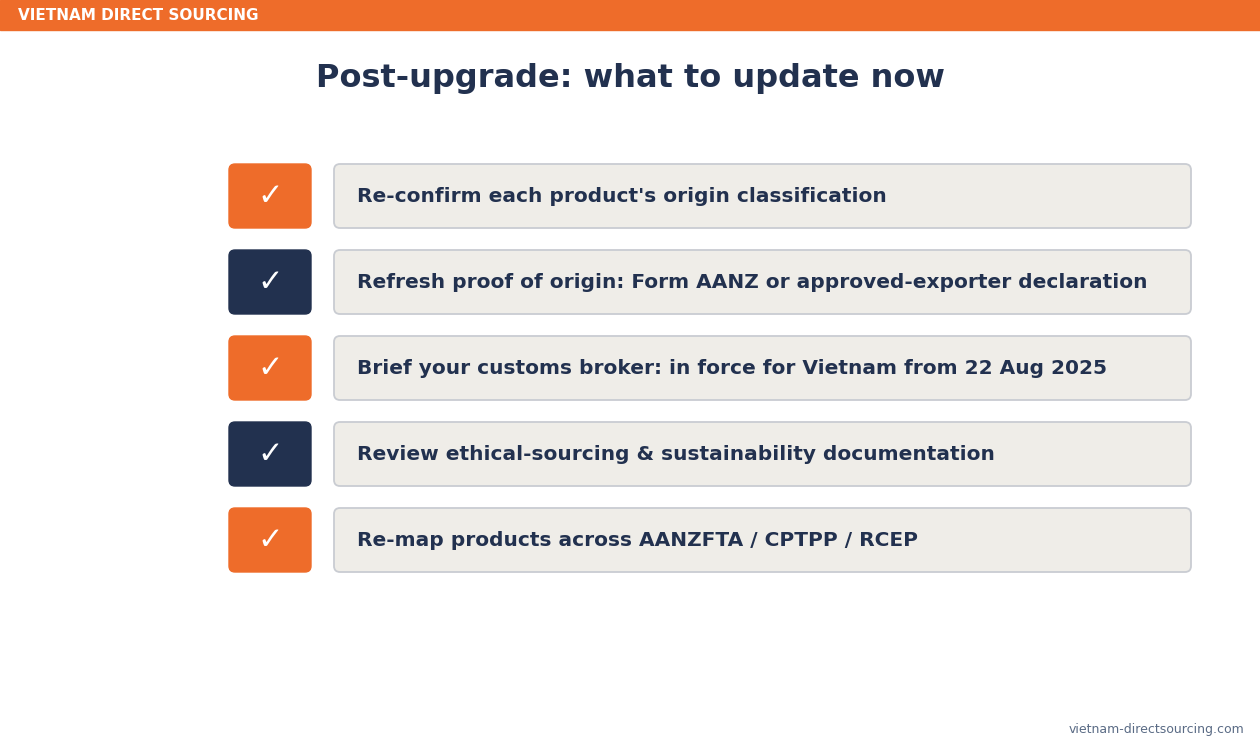
Figure 4: A short compliance tune-up — the things to update now that the Second Protocol is in force for Vietnam.
A real-world example
The situation. A New Zealand importer of outdoor furniture had been sourcing from Vietnam under RCEP because a previous adviser found the AANZFTA origin rule ambiguous for their aluminium-and-textile range.
What changed. After the Second Protocol took effect, the modernised product-specific rules gave a clear CTC pathway for their category. We re-ran the origin review, confirmed the factory could document the transformation, and switched the range to an authority-issued Form AANZ — with the approved-exporter declaration available as a lighter-touch option for later orders.
The payoff. Same zero duty, but now with a cleaner, defensible certificate and simpler customs handling — less audit risk and faster border release. The importer also picked up the MSME chapter’s plain-language guidance, which made onboarding a second supplier noticeably faster. That is the upgrade doing exactly what it was designed to do.
The bottom line
The AANZFTA Second Protocol is not a dramatic tariff change — duty-free access was already the backbone of Vietnam–Australia and Vietnam–New Zealand trade. What it does is modernise the machinery: clearer rules of origin, a new approved-exporter route for proving origin, faster customs, and three new chapters that help smaller importers, open government procurement, and reward ethical sourcing. The traders who win from this are the ones who treat it as a prompt to re-verify their origin claims, refresh their Form AANZ paperwork (or move to an approved-exporter declaration), and re-map products across their available agreements. A short compliance tune-up now protects your duty-free position for years.
A note on sources and timing. The rules of origin and proof-of-origin formats sit in AANZFTA Chapter 3 as amended by the Second Protocol, implemented in Vietnam through Circular No. 44/2025/TT-BCT. Legal position stated as at July 2026; the AANZFTA certification rules changed in August 2025 and further change is possible as the remaining Parties implement the Protocol, so confirm the current requirements — and your product’s HS classification and product-specific rule — before preparing origin documentation.
Source: Written by Rod Smith, Vietnam Direct Sourcing
Not sure where to start? See how our Vietnam sourcing solutions work, from supplier identification to quality assurance.
Learn more about this topic on our podcast!
Want to dive deeper into this subject? Check out our latest podcast on this subject on Spotify, where we explore this topic and so much more! Whether you're on the go or relaxing at home, tune in for insights, tips, and discussions that bring our blog topics to life.

AANZFTA vs CPTPP vs RCEP Trade Agreements for Australia & Vietnam

Leave a comment
Your email address will not be published. Required fields are marked *