




Sourcing Biodegradable Coffins in Vietnam: Turning Green Values into Bottom-Line Gains
April 1, 2025 – 7 min read
Families are shifting. They want funerals that reflect their values—sustainable, dignified, and honest. Enter biodegradable coffins: woven from fast-growing bamboo and wicker, handcrafted in Vietnam, designed to break down naturally in the earth while carrying the same respect and presence families expect at graveside. Funeral home chains and wholesalers across North America are scrambling to stock eco-friendly options. The problem: supply chains are fragmented, pricing is opaque, and quality varies wildly.
Vietnam offers a clear solution. With centuries of weaving tradition, FSC-certified bamboo plantations, and export-ready factories carrying Green Burial Council (GBC) approvals, Vietnam has become the preferred sourcing hub for funeral operators seeking to differentiate their offerings, protect margins, and meet the growing demand for green burial options. This guide walks funeral home chains and wholesalers through the entire process—from identifying the right suppliers to ensuring compliance with North American crematorium standards and GBC requirements.
The Market Opportunity: Why Now?
Demand for green funeral products is accelerating faster than many operators realize. Industry analysts estimate the biodegradable casket market is growing at 6-8% annually through 2030. In the U.S. alone, roughly 1 in 20 funerals now involves an eco-friendly casket—a significant niche that’s expanding rapidly as younger families take control of funeral planning and actively seek alternatives to metal and hardwood.
What’s driving the shift? Environmental awareness, certainly, but also cost. Biodegradable coffins from Vietnam typically land at $400-$800 wholesale depending on materials and customization—30-40% cheaper than traditional hardwood caskets—while commanding premium retail pricing ($1,200-$2,000+) that customers willingly pay for the sustainability story. That’s margin protection on both ends.
Regulatory tailwinds are helping too. The Green Burial Council (a nonprofit certifier) has published standards for biodegradable caskets that are rapidly becoming the de facto requirement for funeral homes marketing “green” burials. North American crematoriums are also tightening emissions standards, making certified biodegradable options increasingly necessary for compliance.
Vietnam’s Competitive Edge
Vietnam isn’t a new player in woven goods—it’s been crafting baskets, furniture, and ceremonial items for centuries. Ancient villages in provinces like Thanh Hoa, Ha Nam, and Ben Tre still specialize in bamboo and wicker weaving. What’s changed is scale and certification. Modern factories now sit adjacent to FSC-certified bamboo plantations, hold ISO 9001 quality systems, and carry Green Burial Council pre-approval—meaning their coffins are already compliant before they reach your dock.
On cost, bamboo and wicker coffins from Vietnam land 30-40% cheaper than Chinese equivalents. A biodegradable casket that quotes at $650 ex-works in Vietnam might run $900-$1,000 from China. Multiply that across 200-500 units annually for a mid-sized funeral home chain, and you’re talking about $50,000-$100,000 in annual savings—funds you can reinvest in marketing your green offering or protect as margin.
Logistics are straightforward too. Weekly sailings from Ho Chi Minh City and Hai Phong reach U.S. West Coast ports in 22-26 days and East Coast ports in 28-32 days. A 40-foot container costs $1,500-$2,000 depending on season. Lead times from order to delivery typically run 70-90 days, giving funeral home chains ample time to integrate new suppliers into their sourcing mix without disrupting inventory.
Bamboo vs. Wicker: Understanding Your Options
Vietnam produces two primary biodegradable casket types: bamboo-woven and wicker-woven. Both are GBC-approved when sourced from certified factories. Understanding the differences helps you match products to market demand.
Bamboo Coffins: Lightweight, fine weave, natural honey color, smooth finish. Bamboo coffins appeal to environmentally conscious families and those seeking a modern aesthetic. They’re durable, carry well (typically 80-120 lbs fully assembled), and break down cleanly in soil within 5-10 years. Most Vietnamese factories can customize dimensions (coffins typically range 180-220 cm length, 60-80 cm width) and offer eco-friendly finishes (water-based lacquer, plant-based oils). Cost: $450-$700 wholesale depending on specifications.
Wicker Coffins: Coarser weave, golden-brown color, rustic appearance. Wicker appeals to families seeking a traditional, artisanal feel. Wicker is slightly heavier (typically 100-150 lbs) and breaks down in 8-15 years depending on soil conditions. Vietnamese wicker suppliers often hand-finish handles and trim details, adding a craft element that commands premium pricing. Cost: $400-$650 wholesale.
Most successful funeral home chains stock both. Offering choice—premium bamboo, traditional wicker, and standard hardwood—lets families select based on values and budget, increasing adoption of green options across your customer base.
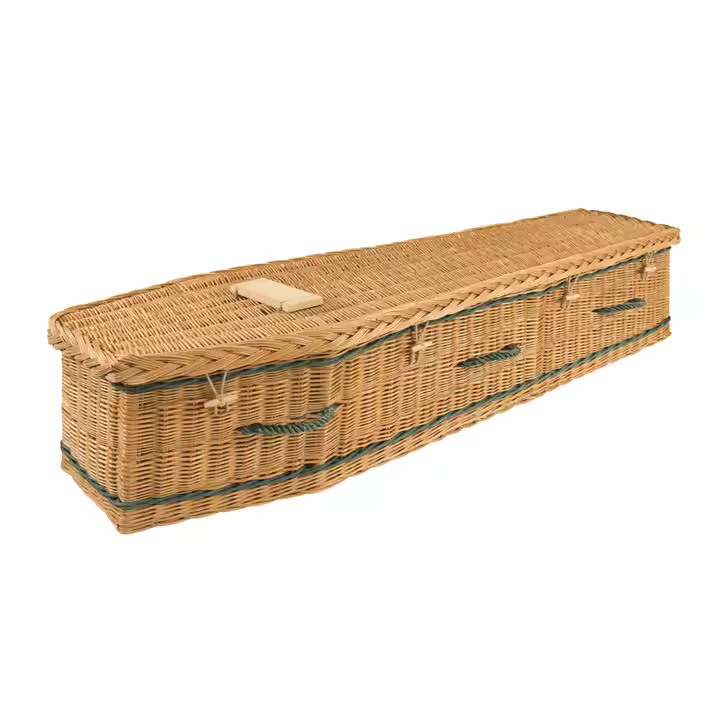
Premium wicker coffin handwoven in Vietnam showing traditional craftsmanship
The Sourcing Process: Five Critical Steps
Step 1: Define Specifications & Compliance Requirements
Before contacting suppliers, lock down exact requirements. Create a detailed specification including coffin dimensions (length, width, depth), weight capacity (typically 150-250 lbs), material type (bamboo or wicker), finish options, and crucially—compliance certifications needed for your market.
For North American funeral home chains, GBC certification is non-negotiable. The Green Burial Council vets coffins for biodegradability, structural integrity, and chemical compliance. Most Vietnamese factories with EU/U.S. export experience already hold GBC approval or can obtain it within 4-6 weeks. Ask upfront: Does the factory hold active GBC certification? If not, factor 45 days and $2,000-$3,000 into your timeline for certification testing.
Also clarify crematorium compatibility. Some crematoriums have specific size or material restrictions. Confirm your target crematoriums’ requirements and share them with suppliers early—it eliminates costly rework.
Step 2: Identify & Vet Suppliers
Finding reliable bamboo and wicker coffin suppliers in Vietnam requires targeted searching. Start with:
- Industry directories: TradeKey, Global Sources, Alibaba (filter for “coffin” or “casket” suppliers in Vietnam with GBC mentions).
- Peer networks: Contact other funeral home chains and wholesalers; many openly share Vietnam supplier contacts.
- Trade shows: Funeral service expos often feature Vietnamese exhibitors with GBC-certified products on display.
- Direct outreach: Contact craft villages in Ha Nam and Thanh Hoa provinces through local trade associations.
When you identify candidates, request a supplier profile including: ownership structure, years in business, annual capacity (units/month), export history, GBC certification status, and references from 3-5 existing funeral home customers.
Don’t skip reference calls. Ask about quality consistency, lead time adherence, responsiveness to custom requests, and any issues encountered. A supplier who’s worked with funeral homes understands the stakes—timely, dignified delivery matters.
Step 3: Request Samples & Conduct Audits
Once you’ve narrowed to 2-3 candidates, order physical samples. Specify exact dimensions, material, and finish. Pay the sample fee ($75-$150 per unit)—it’s a sign of respect and weeds out tire-kickers.
Evaluate samples for structural integrity, weave quality, handle strength, and finish consistency. Test handles by applying downward pressure (simulate pall bearing load). Check for splinters or rough edges. Inspect weave for loose strands or gaps. Smell the coffin—any off-gassing indicates cheap finishes; quality goods smell like natural bamboo or wicker, nothing chemical.
Next, schedule a factory audit—ideally in person, but virtual tours work if travel isn’t feasible. During the audit, assess:
- Raw material sourcing: Are bamboo and wicker stored properly? Can the factory trace FSC certification back to plantation? Do they maintain chain-of-custody documentation?
- Weaving quality: Are machines calibrated? Is there a quality gate inspecting weave density at 25%, 50%, and 75% completion?
- Finishing processes: What lacquers and adhesives are used? Can they provide safety data sheets (SDS) for all chemicals?
- GBC compliance: Can they show current GBC certification documents and test reports validating biodegradability?
- Labor conditions: Are workers safe? Weaving is hand-intensive, so fair wages and safe conditions matter for your supply chain integrity.
A modest audit fee ($400-$600) is cheap insurance against quality surprises. Many factories welcome audits—it demonstrates you’re a serious, professional buyer.
Step 4: Negotiate Terms & Trial Order
Once you’ve selected a supplier, negotiate pricing, MOQ (minimum order quantity), lead time, and payment terms. Most Vietnamese coffin factories accept 30% deposit + 70% on shipment (via wire transfer or letter of credit). MOQs typically range from 50 units for custom designs to 200+ for standard products.
Start with a trial order—enough to test market demand and operational integration without overcommitting. For a mid-sized funeral home chain, that might be 100-150 units split between bamboo and wicker. A trial order lets you evaluate quality at scale, validate lead times, train staff on handling and marketing, and confirm customer response before scaling to 500+ unit annual volumes.
Step 5: Lock Quality Standards & Pre-Shipment Protocols
Before production begins on larger orders, freeze specifications with a golden sample—a reference coffin that defines acceptable quality. Both you and the factory sign off that this is the standard. During production, the factory should conduct inline quality checks at 30%, 60%, and 90% completion.
Before shipping, hire an independent inspector to audit the order (checking 2-3% of units per carton). Pre-shipment inspection costs $500-$800 per container but prevents costly returns and ensures GBC compliance documentation travels with each shipment.
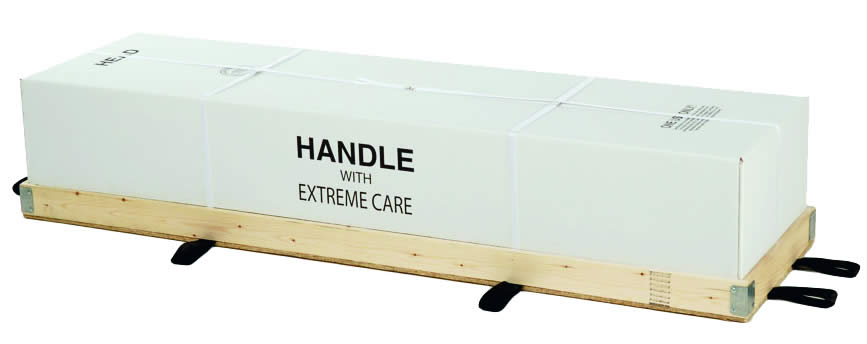
Individual packaging protects coffins during transit while maintaining eco-friendly materials
Certifications & Compliance: What Funeral Homes Need
Green Burial Council (GBC) Certification: This is the gold standard for North American funeral homes. GBC-approved coffins meet rigorous standards for biodegradability, structural integrity, and material safety. GBC certification typically costs factories $5,000-$10,000 annually but is essential if you’re marketing “green burial” services. Always verify a supplier holds active GBC status before placing orders.
FSC® Chain of Custody: If your marketing emphasizes “sustainably harvested bamboo,” verify the factory holds FSC CoC certification. FSC adds 5-10% to product cost but guarantees traceable, responsibly managed bamboo sourcing. Many U.S. funeral homes partner with conservation organizations, making FSC certification a differentiator.
Crematorium Compliance: Different crematoriums have different requirements. Some require coffins under a certain weight; others limit material composition (no plastic, no synthetic handles). Before finalizing supplier selection, get written specifications from your target crematoriums and share them with the factory. Vietnamese suppliers experienced with North American exports know these requirements, but confirming upfront prevents expensive rework.
ISO 9001 Quality Management: Many Vietnamese coffin factories hold ISO 9001, which demonstrates consistent quality processes. It’s not mandatory but reassuring, particularly for funeral home chains managing multiple locations and needing supply consistency.
BSCI Labor Audits: If your funeral home chain has corporate ESG commitments, BSCI (Business Social Compliance Initiative) audits confirm fair labor practices at the factory. Vietnam’s coffin-weaving villages increasingly hold BSCI status, reflecting improving labor standards across the industry.
Real Case Study: Georgia Funeral Home Chain Pivots to Green
A mid-sized funeral home chain operating 8 locations across Georgia noticed younger families asking about eco-friendly burial options. They had no supply chain for green coffins and faced losing business to competitors launching “natural burial” services.
In January 2025, they partnered with Vietnam Direct Sourcing to identify suppliers. We identified a factory in Ha Nam province that held GBC certification, had 15 years exporting to North America, and could deliver mixed orders (bamboo and wicker) within 75 days.
The chain’s specifications: coffins 200-220 cm long, 65-75 cm wide, suitable for cremation at their partner crematoriums, and priced to achieve 40% wholesale margin. The factory quoted $550 for bamboo (GBC-certified) and $480 for wicker (GBC-certified).
Trial order: 150 units (75 bamboo, 75 wicker). Timeline: Sampling (3 weeks) → negotiation (2 weeks) → production (6 weeks) → shipping (4 weeks) = 15 weeks total. First container arrived on schedule.
Quality exceeded expectations. Crematorium feedback was immediate: “Excellent structural integrity, no ash residue, burns cleanly.” The chain’s marketing team launched “Georgia Green Burials” with before/after photos comparing traditional hardwood vs. bamboo/wicker options. Within 60 days, 25% of their funeral services involved a biodegradable coffin—versus essentially zero three months prior.
Margin impact: Green coffins sold at $1,400-$1,600 retail, yielding $850-$1,120 gross profit per unit vs. $600-$800 on traditional caskets. On 500 annual green coffins (their Year 1 goal), that’s $125,000+ in incremental profit.
Key lesson: The green funeral market isn’t niche—it’s rapidly mainstream. Funeral home chains that source early and market confidently gain competitive advantage and protect margins.
Logistics, Packaging & Storage Best Practices
Biodegradable coffins are delicate. Here’s how to protect quality through the supply chain:
Shipping & Packaging: For bulk orders, factories nest coffins together, shrink-wrap them, and brace stacks with lightweight pine frames—maximizing container density and keeping freight costs around $4-$6 per unit. For smaller orders or direct-to-customer channels, ask for flat-pack versions: each coffin ships knocked down in its own cardboard box with minimal plastic. Ensure packaging uses water-based inks and plastic-free strapping—your eco-story extends to the unboxing experience.
Storage Conditions: Bamboo and wicker are sensitive to humidity. Upon arrival, store coffins in climate-controlled warehouses (50-55% relative humidity, 18-22°C). Excess moisture causes swelling; dry conditions can cause checking (surface cracks). Many funeral home chains establish relationships with local climate-controlled storage facilities to manage inventory without needing large on-site warehouses.
Handling & Staff Training: Coffins are lighter than traditional caskets (80-150 lbs vs. 200-250 lbs) but more delicate. Train pall bearers and funeral directors on proper handling—avoid dragging, support from underneath, and protect edges during transport. Most factories provide handling guides; sharing these with staff prevents damage and customer experience issues.
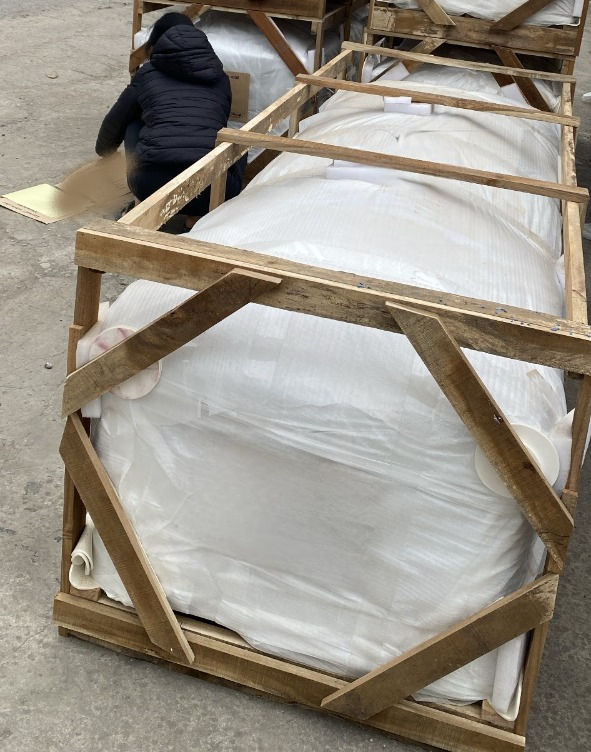
Proper packaging ensures coffins arrive in pristine condition ready for funeral service
Common Pitfalls & How to Avoid Them
Moisture creep: Tropical humidity during production and ocean transit can cause bamboo to absorb moisture, leading to swelling and warping. Solution: Ask suppliers to kiln-dry finished coffins to under 10% moisture content and store in dehumidified rooms before shipment. Upon arrival, inspect moisture levels and store in climate-controlled warehouses.
Weave quality variance: Hand-weaving is inconsistent—one coffin might have tighter weave than another. Solution: Specify exact weave density (e.g., “8 strands per cm”) in your specs. Request pre-production samples showing the exact weave pattern, and conduct inspections when 30% of the order is complete—still time for rework if needed.
Certification gaps: You think you’re ordering GBC-certified coffins, but the factory’s certification expired or only covers specific models. Solution: Request written confirmation of current GBC certification before placing orders. Ask the factory to provide a copy of their current GBC certificate and list of approved products. Cross-check with the Green Burial Council’s online directory.
Crematorium incompatibility: A coffin arrives beautiful but one of your crematoriums won’t accept it due to size or material restrictions. Solution: Before finalizing supplier selection, obtain written specifications from all crematoriums you plan to partner with. Share these with the factory and get written confirmation they can meet requirements.
Tet holiday bottlenecks: Vietnamese factories shut down for 7-10 days around Lunar New Year (late January/early February). Solution: Lock in POs 45-60 days before Tet if you need delivery before the holiday. Pre-book container space with your forwarder well in advance.
Getting Started: Next Steps for Funeral Home Chains
Your path to sourcing biodegradable coffins from Vietnam follows a clear roadmap:
- Define your market positioning: Will you offer green coffins as a premium option, a mid-tier alternative, or across all price points? This shapes supplier selection and inventory strategy.
- Lock down specifications: Work with your crematoriums and legal team to finalize coffin dimensions, material requirements, and compliance certifications needed.
- Identify 3-5 supplier candidates: Use trade directories, peer networks, and industry contacts to short-list factories holding GBC certification and North American export experience.
- Evaluate references: Contact existing funeral home customers of prospective suppliers. Ask about quality, reliability, and how the supplier handled issues.
- Request samples: Pay the sample fee. Order bamboo and wicker versions from your top 2-3 candidates and evaluate them rigorously.
- Conduct supplier audits: Visit in person or via virtual tour. Assess raw material sourcing, quality processes, GBC certification status, and labor conditions.
- Run a pilot order: Start with 100-150 units (mix of bamboo and wicker). Test market demand, staff readiness, and supply chain execution before scaling.
- Develop marketing strategy: Green burial services resonate with younger families and those with strong environmental values. Develop messaging, photography, and retail positioning that differentiates your chain from competitors.
- Scale with confidence: Once the pilot succeeds, lock in annual volume commitments (300-500+ units) to secure pricing and priority production capacity.
Vietnam’s biodegradable coffin sector is mature, certified, and eager for partnerships with serious funeral home chains. The green burial market is growing 6-8% annually, and funeral homes that source early and market effectively gain significant competitive advantage. By following a disciplined sourcing process—specifications first, samples second, audits third—you can access products that honor families’ environmental values while protecting your margins and differentiating your funeral home chain in a competitive market.
The funeral homes winning in green services aren’t the ones undercutting on price. They’re the ones investing upfront in supplier relationships, staff training, and authentic marketing to build trust with families seeking meaningful, sustainable burial options. That investment pays dividends in customer loyalty, market share, and long-term profitability.
Tags: Biodegradable coffins Vietnam | Green burial caskets | Eco-friendly funeral products | Funeral home sourcing | Sustainable burial options
Not sure where to start? See how our Vietnam sourcing solutions work, from supplier identification to quality assurance.
Learn more about this topic on our podcast!
Want to dive deeper into this subject? Check out our latest podcast on this subject on Spotify, where we explore this topic and so much more! Whether you're on the go or relaxing at home, tune in for insights, tips, and discussions that bring our blog topics to life.




How to Find Bamboo Suppliers in Vietnam: A Complete Sourcing Guide

Leave a comment
Your email address will not be published. Required fields are marked *