





Sourcing Sustainable & Eco-Friendly Ramie vs Linen Textiles in Vietnam: A Complete Guide
Sourcing Sustainable & Eco-Friendly Ramie Textiles in Vietnam: A Complete Guide
June 1, 2025 – 10 min read
Modern apparel brands face a critical challenge: consumers demand sustainability, but sustainable alternatives are scarce and expensive. Enter ramie—an ancient plant fiber experiencing a 21st-century renaissance. Stronger than cotton, softer than linen, biodegradable, and requiring minimal pesticides, ramie is the sustainable textile that luxury and mainstream brands are scrambling to source. Vietnam, home to over 20,000 hectares of ramie cultivation and dozens of OEKO-TEX and GOTS-certified processing facilities, has become the world’s leading supplier. For apparel importers seeking competitive advantage and ESG credibility, Vietnamese ramie offers both.
Why Ramie Matters Now: The Sustainability Imperative
Global textile production is a sustainability disaster. Cotton consumes 16% of the world’s pesticides despite occupying only 2.5% of arable land. Polyester is petroleum-based and non-biodegradable. Conventional dyeing processes dump toxic chemicals into waterways. Meanwhile, conscious consumers—particularly in North America, Europe, and Australia—are voting with their wallets. Demand for certified sustainable textiles is growing 12-15% annually, and premium apparel brands are willing to pay 20-40% price premiums for fabrics that tell a genuine sustainability story.
Ramie addresses multiple pain points simultaneously. It’s naturally strong (stronger than cotton), requires minimal chemical inputs during cultivation, biodegrades fully within months, and produces zero microplastic pollution. When sourced from GOTS-certified (Global Organic Textile Standard) and OEKO-TEX-certified processors, ramie carries marketing credibility that resonates with ethical consumers. Vietnam’s dominance in ramie production—both raw cultivation and processing—makes it the optimal sourcing destination for brands seeking to scale sustainable collections without sacrificing cost or quality.
Understanding Ramie: History, Characteristics & Uniqueness
Ramie (Boehmeria nivea) is neither new nor trendy—it’s ancient. Chinese and Indian textile traditions document ramie use dating back thousands of years. Colonial trading records show ramie shipments from Southeast Asia to European markets in the 18th and 19th centuries. What’s new is the industrial processing technology and global certification infrastructure that now makes ramie viable for mainstream fashion.
The Fiber Itself: Ramie grows as a herbaceous perennial shrub, producing tall stalks with strong bast fibers running through the plant structure. The raw fiber is extracted from the stalks, then processed into yarn-ready form. Unlike cotton, which is a seed fiber harvested once annually, ramie can be harvested 3-4 times yearly from the same plant, making it extraordinarily productive. A single hectare yields more fiber per year than cotton or flax. The fiber itself is naturally creamy-white and lustrous, requiring minimal processing to achieve beautiful finished fabric.
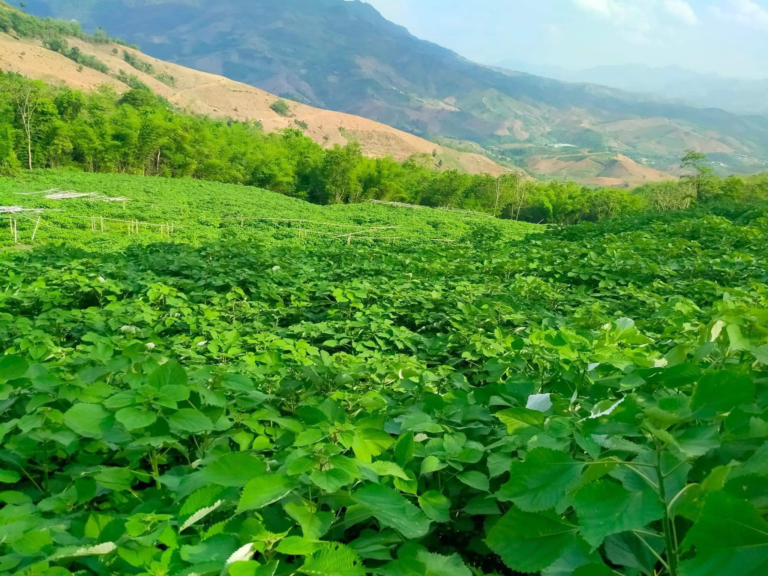
Ramie plant thrives in Vietnam’s tropical climate with minimal inputs
Unique Properties: Ramie fabric has a naturally lustrous sheen, similar to linen but with a smoother, more refined hand-feel. It’s naturally absorbent, breathable, and regulates moisture—ideal for warm-weather apparel. Mechanically, ramie is 30% stronger than cotton and 8x stronger than wool, yet produces textiles that feel soft and drape elegantly. The fiber naturally resists wrinkles better than linen (a significant practical advantage for retail and consumer use), resists bacterial growth, and has excellent tensile strength even when wet. Ramie fabric also dyes exceptionally well, accepting both natural and synthetic dyes with vibrant, lasting color.
Ramie vs. Linen: Key Differences: While often compared, ramie and linen have distinct characteristics. Ramie is typically stronger, smoother to the touch, and dyes more easily. Linen tends to wrinkle more (which some consumers prefer for aesthetic reasons). Ramie absorbs and releases moisture slightly faster, making it superior for athletic and active wear. Linen has a longer heritage in Western fashion, while ramie is gaining ground among eco-conscious brands. Both are sustainable, but ramie’s multiple harvests per year and minimal pesticide requirements make it slightly more environmentally efficient. For apparel brands, ramie blends offer an excellent compromise: the strength and smoothness of ramie combined with the heritage appeal of linen.
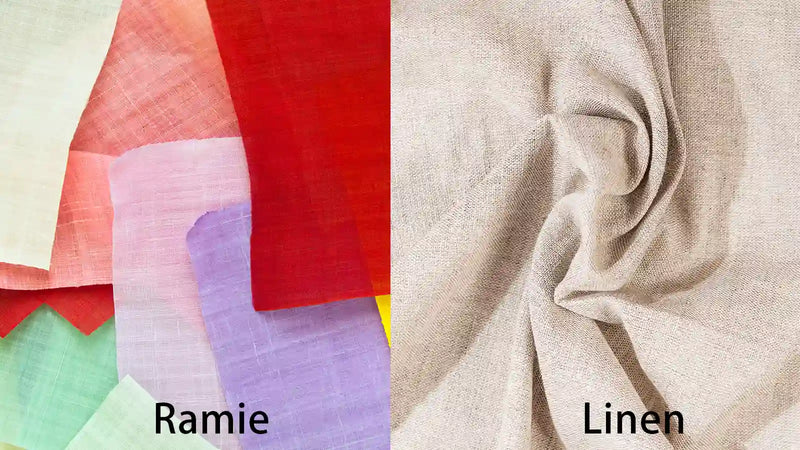
Ramie’s smooth finish and vibrant color absorption compared to traditional linen
Certifications & Environmental Impact: Ramie cultivation requires virtually no synthetic pesticides (though some fungicide use occurs in wet climates). When GOTS-certified, ramie means no synthetic inputs and full traceability from plant to fabric. OEKO-TEX certification ensures dyes and finishing chemicals meet strict safety and environmental standards. The combination of low-input cultivation + certified processing creates a genuinely sustainable narrative that premium brands can stand behind.
Vietnam’s Competitive Edge in Ramie
Vietnam didn’t invent ramie cultivation—the plant has thrived in Southeast Asia for centuries—but Vietnam industrialized and perfected it. Today, the country dominates global ramie production for several reasons:
Scale & Consistency: Over 20,000 hectares of ramie cultivation across the Mekong Delta, Red River Delta, and central regions produce a reliable, year-round supply. Unlike seasonal crops, ramie’s multiple harvests per year ensure consistent availability. Chinese production has declined significantly due to labor costs and environmental restrictions, giving Vietnam virtual monopoly status on high-quality, certified ramie fiber.
Processing Infrastructure: Dozens of mid-sized spinning and fabric mills cluster around Thanh Ha (Hoi An area) and Vinh Long province. These facilities have modernized rapidly over the past decade, investing in equipment and certifications to meet international standards. Most major mills now hold GOTS, OEKO-TEX, ISO 9001, and BSCI certifications—a rare combination that enables seamless integration into global supply chains. The processing journey—from raw fiber extraction through degumming, bleaching, spinning, weaving, and finishing—is executed with precision equipment and experienced craftspeople.
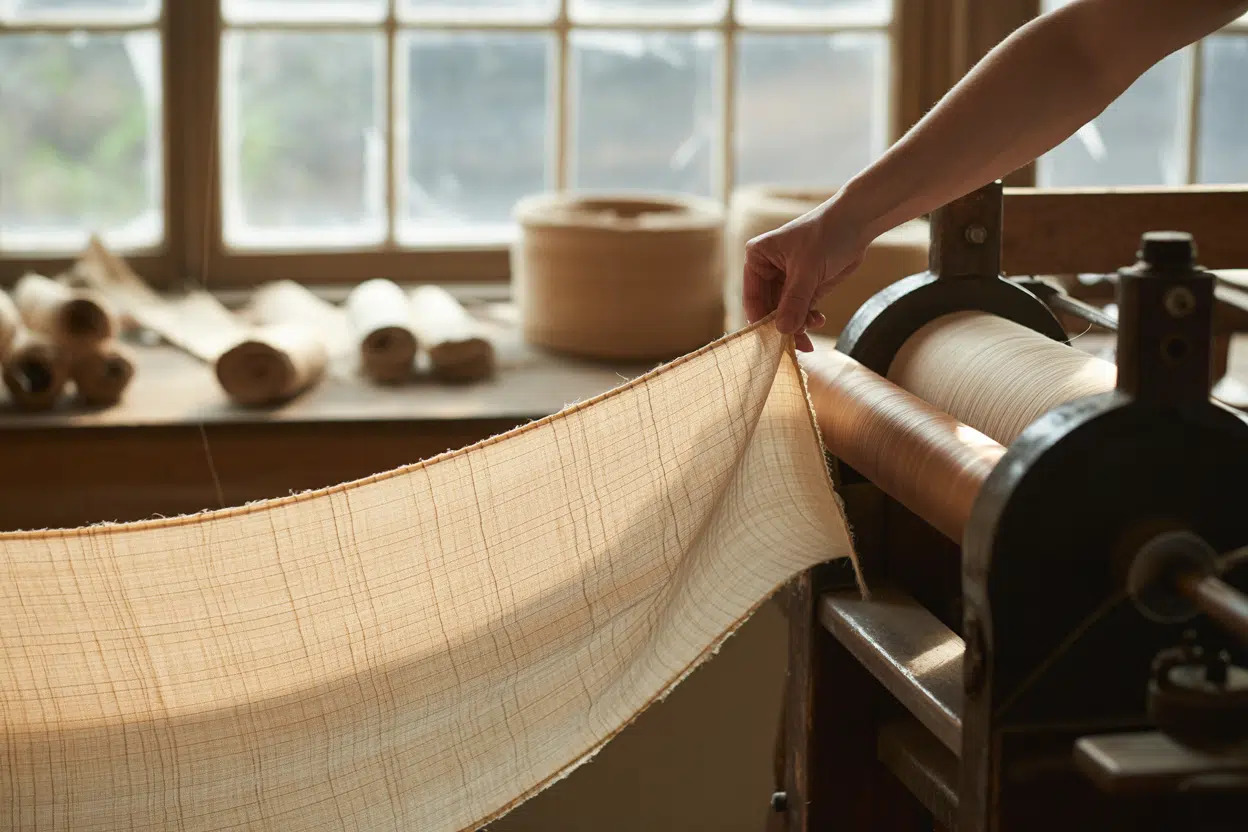
Traditional ramie processing machinery operated by skilled technicians in Vietnamese mills
Cost Efficiency: Labor-intensive fiber processing that’s prohibitively expensive in the West remains economically viable in Vietnam. This translates to ramie fabrics landing at 30-50% lower cost than equivalent European ramie textiles, while maintaining identical quality and certifications. For apparel brands, this means genuine sustainability without margin compression.
Innovation & Customization: Vietnamese mills have invested in R&D to develop ramie blends with cotton, linen, and recycled fibers—expanding design possibilities. Custom weaves, dyeing techniques (including natural dye partnerships), and finish treatments are increasingly available. Factories are responsive to small-batch orders and willing to experiment with new applications.
Ramie Fabric Applications & Market Positioning
While ramie remains niche compared to cotton, apparel brands are discovering diverse applications:
Premium Menswear & Womenswear: Ramie’s natural sheen and drape make it ideal for button-ups, shirts, and structured garments. Luxury brands position ramie as a sustainable alternative to linen—premium positioning justified by superior durability and performance. The fabric’s strength means garments maintain their shape after repeated wear and washing. Wholesale cost: $8-$15/meter depending on weave density and finish.
Activewear & Athleisure: Ramie blends (50% ramie / 50% cotton or 30% ramie / 70% recycled polyester) create moisture-wicking, durable fabrics suitable for yoga, running, and casual wear. The “sustainable luxury” positioning resonates with affluent fitness consumers. Wholesale cost: $10-$18/meter.
Home Textiles: Bedding, curtains, and upholstery made from 100% ramie command premium pricing. The durability and breathability appeal to eco-conscious home décor buyers. Ramie’s strength means bed linens resist pilling and maintain softness through hundreds of wash cycles. Wholesale cost: $6-$12/meter.
Accessories & Footwear: Ramie linings, tote bag materials, and hat bands leverage the fabric’s strength and aesthetic appeal. Emerging opportunity as brands develop entire “sustainable collections.”
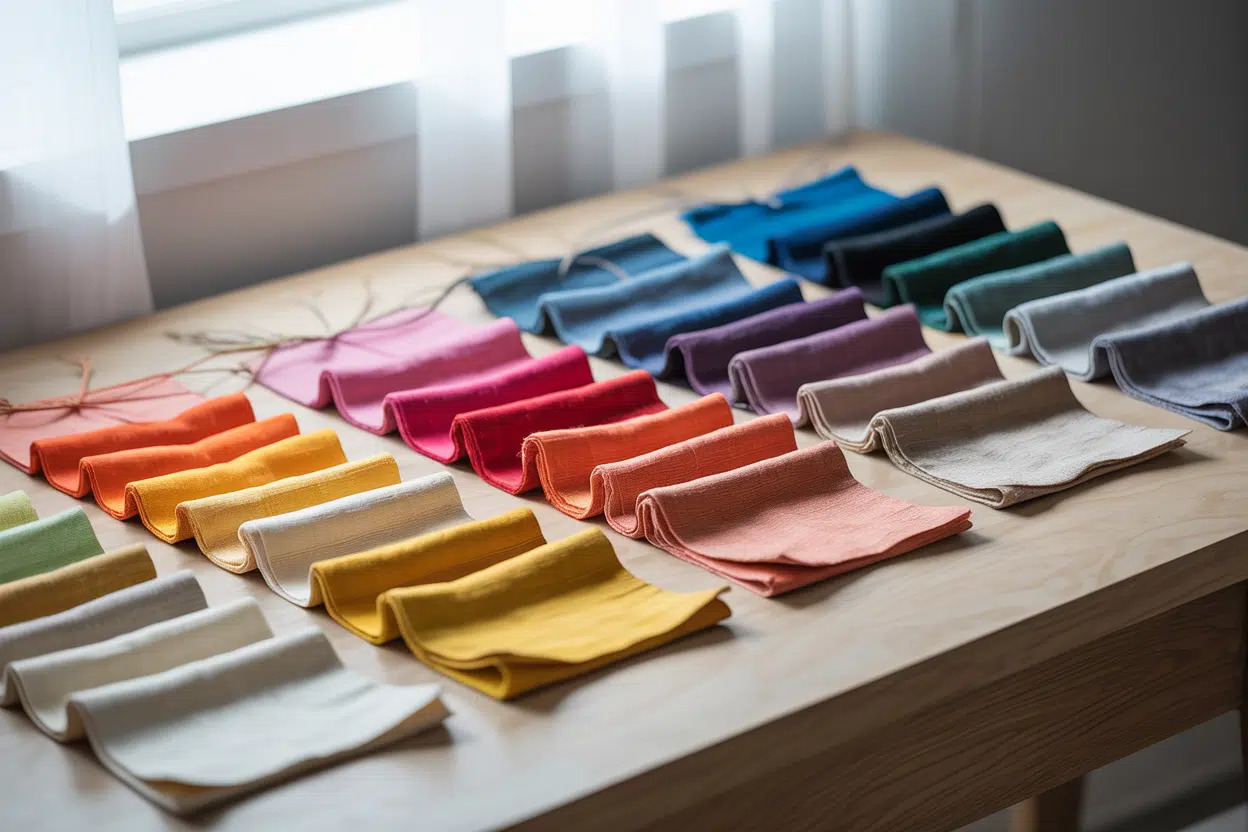
Ramie’s vibrant color range achieved through natural and certified synthetic dyes
Branding Opportunity: “Made from Vietnamese ramie” carries emerging cachet similar to “Japanese denim” or “Italian leather.” Apparel brands that build narrative around ramie’s sustainability, strength, and artisanal processing can differentiate and command price premiums. Consumer education is critical—most consumers don’t know what ramie is—but storytelling creates loyalty.
Ramie Fabric Care & Durability: Consumer Benefits
Understanding ramie’s care requirements is essential for marketing and customer satisfaction. Unlike some delicate natural fabrics, ramie is remarkably durable:
Washing & Care: Ramie garments can be machine-washed in cool to warm water with mild detergent. The fiber’s strength means it tolerates regular washing without degradation. Interestingly, ramie becomes softer with repeated washing—a significant advantage over linen, which can remain stiff. Avoid excessive heat and harsh chemicals. Gentle cycle is recommended to extend garment life, though ramie’s durability means it can tolerate normal cycles better than many delicate fabrics.
Drying & Storage: Air-drying is preferred, though ramie can tolerate low-heat machine drying without damage. The fabric’s natural anti-bacterial properties mean it resists odor better than cotton, reducing washing frequency. This durability and low-maintenance profile appeal to consumers seeking practical luxury.
Longevity & Value: Ramie garments, when properly cared for, last significantly longer than cotton alternatives. The fiber’s strength means minimal pilling, fading, or structural breakdown. This longevity justifies premium pricing and aligns with circular fashion values—fewer replacements needed means lower lifetime environmental impact.
The Sourcing Process: 5 Steps to Securing Ramie Supply
Step 1: Define Your Fabric Specifications & Certifications
Lock down exact requirements before contacting suppliers. Create detailed specs including fiber content (100% ramie vs. blends), yarn weight, weave structure, finish (dyed, natural, pre-shrunk), color specifications, and certifications required (GOTS, OEKO-TEX, both?). Be explicit about end-use: activewear requires different durability than home textiles.
For DTC and premium brands, certifications are non-negotiable. GOTS certification requires organic cultivation, no synthetic pesticides or GMOs, and full supply chain transparency. OEKO-TEX certification focuses on finished fabric safety—ensuring no harmful chemicals in dyes or finishes. Most Vietnamese mills hold both, but confirm upfront and request current certificates.
Step 2: Identify & Vet Suppliers
Vietnamese ramie suppliers range from village-level spinners (5,000-10,000 meters/month capacity) to modern mills (100,000+ meters/month). For apparel brands, mid-sized mills (20,000-50,000 meters/month) offer ideal balance: certified, responsive, flexible on customization, competitive pricing.
Find suppliers via trade directories (TradeKey, Global Sources), industry contacts (reach out to other ethical brands and see who they source from), and direct outreach to mill clusters in Thanh Ha and Vinh Long. Request company profiles including ownership, certifications, production capacity, export history, and references from existing customers.
Red flags: Mills unwilling to provide certificates, vague about sourcing, or unable to articulate their supply chain transparency. Green flags: GOTS/OEKO-TEX current certifications, willingness to audit, references from recognizable brands, transparent pricing structure.
Step 3: Request Samples & Evaluate Quality
Order physical samples in your exact specifications. Specify yarn weight, weave pattern, dye lot (if colored), finish (soft-hand, structured, etc.), and minimum order quantity. Expect sample fees ($100-$300 per sample depending on customization) and 2-3 week lead times.
Evaluate samples for:
- Hand-feel: Does it match your brand’s aesthetic? Ramie can range from crisp (linen-like) to soft (cotton-like) depending on processing. Test softness development after light washing.
- Sheen & Color: Is the luster consistent? Does dyed color match your specification? Ramie’s natural sheen should be visible even in matte finishes.
- Shrinkage: Request pre-shrunk samples. Test by washing (gentle cycle, warm water) and measuring. Acceptable shrinkage: <3%. Ramie typically shrinks slightly less than linen.
- Durability: Check for pilling after light rubbing. Ramie should resist pilling better than cotton. Conduct a tensile strength test by gently pulling the fabric.
- Certifications: Ask supplier to provide copies of current GOTS/OEKO-TEX certificates for the exact fabric sampled.
Step 4: Conduct Factory Audits & Negotiate Terms
Schedule a factory visit—in person if possible, virtual tours if needed. Assess:
- Raw Material Sourcing: Where does ramie come from? Can they trace it to certified plantations? Do they maintain documentation?
- Processing: What equipment for spinning, weaving, dyeing? Are dye chemistry and waste-water treatment transparent? Quality mills should have degumming and bleaching systems that minimize chemical discharge.
- Quality Control: How do they measure finished fabric against specs? Do they conduct shrinkage testing, tensile strength testing, or color fastness?
- Certifications: Can they show current GOTS/OEKO-TEX certificates and audit reports? Who audits them?
- Capacity & Lead Time: Can they handle your volume? What’s the production timeline? Do they build buffers for customization?
Once satisfied, negotiate pricing, MOQ, lead time, and payment terms. Most Vietnamese mills accept 30% deposit + 70% on shipment. MOQs typically range from 2,000-5,000 meters for standard fabrics, 5,000+ for custom weaves.
Step 5: Pilot Order & Quality Lock
Start with a pilot order—enough to produce sample garments and test market response without overcommitting. For apparel, that might be 3,000-5,000 meters. A pilot order validates production quality, lead times, supplier communication, and customer reception before scaling to 20,000+ meter annual volumes.
Before production, freeze specifications with a golden sample—a reference fabric both you and the supplier sign off on. During production, request photos at 25%, 50%, and 75% completion. Before shipment, hire a third-party fabric inspector to audit quality (checking for defects, measuring shrinkage, verifying color consistency). Pre-shipment inspection costs $300-$500 but prevents costly returns and protects brand reputation.
Certifications & Compliance for Sustainable Ramie
GOTS (Global Organic Textile Standard): The gold standard for organic certification. GOTS covers fiber cultivation (no synthetic pesticides or GMOs), processing (no hazardous chemicals), and labor standards. Ramie fabrics certified GOTS command 15-30% price premiums and resonate strongly with ethical consumers. Verify current GOTS certificates with the GOTS directory (gots.org) before ordering.
OEKO-TEX Standard 100: Focuses on finished fabric safety. Tests for harmful chemical residues in dyes and finishes. Essential for apparel touching skin (not just home textiles). OEKO-TEX certification is often faster to obtain than GOTS but covers different territory—many premium mills hold both.
ISO 9001 Quality Management: Demonstrates consistent production processes. Not sustainability-focused but reassures buyers that quality control is systematic.
BSCI Labor Audit: Verifies fair wages, safe working conditions, and no child labor. If your brand has corporate ESG commitments, BSCI adds credibility and de-risks supply chain.
Natural Dyes & Finishing: Some mills partner with natural dye suppliers (indigo, madder, plant-based dyes) to create zero-chemical alternatives. Emerging opportunity for premium brands building “nature-to-garment” narratives.
Real Case Study: Sustainable Activewear Brand Scales Production
A London-based activewear startup, “FlowMode,” launched with ramie-blend performance fabrics sourced from ethical suppliers. Their original supplier was European—quality was excellent but pricing limited them to luxury positioning ($120+ retail per item).
In early 2025, they partnered with a Vietnamese mill in Vinh Long holding GOTS and OEKO-TEX certifications. Specification: 50% GOTS-certified ramie / 50% recycled polyester blend, moisture-wicking finish, four-way stretch applications.
Supplier evaluation, sampling, and auditing took 6 weeks. Pilot order: 5,000 meters. Timeline: Sampling (3 weeks) → negotiation (2 weeks) → production (6 weeks) → ocean freight (4 weeks) = 15 weeks total from first contact to warehouse receipt.
Results: Landed cost for the ramie-blend fabric: $12/meter (vs. $18/meter from European supplier). FlowMode maintained identical quality and certifications while reducing COGS by 33%. They used margin recovery to fund influencer marketing and expanded product line to include leggings, sports bras, and tops. Within 12 months, revenue grew 240% and they shipped to 15 countries. The “sustainably sourced in Vietnam” narrative became a competitive advantage, especially with younger demographics.
Key lesson: Vietnam’s ramie supply isn’t just cost-efficient—it’s quality-certified and globally competitive. Brands that source confidently and market the sustainability story win.
Logistics, Pricing & Supply Chain Reality
Landed Cost Breakdown (100% GOTS Ramie Fabric, $10/meter ex-works):
- Factory price (ex-works): $10.00
- Inland transport to port: $0.30
- Ocean freight (per meter, amortized over 10,000m order): $0.40
- U.S. tariff (fabric, ~15%): $1.50
- Drayage & customs: $0.20
- Insurance & contingency: $0.10
- Total landed: $12.50/meter
Lead time from order to U.S. warehouse typically runs 60-75 days (production + ocean freight). Most mills provide 4-6 week production windows, with ocean freight taking 20-25 days depending on port destination.
MOQ Economics: Vietnamese mills typically set MOQs at 2,000-5,000 meters for standard fabrics. A 5,000-meter order occupies ~1 cubic meter of container space—economical to consolidate with other shipments. Smaller brands under 3,000 meters might incur higher per-unit costs or longer lead times, but most mills will accommodate.
Payment Terms: Standard is 30% deposit (due with purchase order) + 70% on bill of lading (when shipment departs Vietnam). Some mills offer 15/85 or negotiate extended terms for committed long-term customers.
Common Pitfalls & How to Avoid Them
Certification Claims Without Verification: A supplier claims GOTS certification but can’t provide current certificates. Solution: Always request written proof. Verify via GOTS online directory. Don’t trust verbal assurances—certifications cost money and are worth confirming.
Shrinkage Surprises: Ramie shrinks more than cotton if not pre-shrunk properly. Finished garments arrive and customer returns spike. Solution: Test pilot order samples through wash (gentle cycle, warm water). Specify maximum acceptable shrinkage (typically <3%) in your purchase order. Request pre-shrunk fabric or build shrinkage into your garment sizing.
Color Variation Between Batches: First order’s navy is rich; second order’s navy is lighter. Customers notice. Solution: Specify Pantone or RGB color references. Request color fastness testing (OEKO-TEX includes this). Ask supplier to maintain dye batches and communicate if dye lot changes.
Lead Time Miscommunication: You quote 12-week lead time to your retailer; supplier delivers in 16 weeks. Solution: Lock production timelines upfront in writing. Build 2-week buffers into your customer promises. Confirm ocean freight booking and shipping schedules before production begins.
MOQ Misalignment: You want 1,000 meters; supplier’s minimum is 5,000. Solution: Ask about fabric pooling—can you share a container with another buyer? Or negotiate lower MOQ for premium pricing. Some mills will accommodate smaller orders if you commit to annual volumes.
Getting Started: Your Action Plan
- Define your fabric spec: 100% ramie or blend? Weight, weave, dye, finish? GOTS, OEKO-TEX, or both? Target cost per meter?
- Identify 3-5 mill candidates: Use trade directories, peer networks, and direct outreach to Thanh Ha/Vinh Long clusters.
- Request samples from top 2-3 mills: Pay sample fees. Test for hand-feel, shrinkage, and durability.
- Conduct factory audits: Visit in person or via Zoom. Verify certifications, sourcing, and capacity.
- Run a pilot order: 2,000-5,000 meters to test quality, lead times, and customer response.
- Lock certifications & supply chain transparency: Get written guarantees of GOTS/OEKO-TEX compliance and audit documentation.
- Scale with confidence: Once pilot succeeds, commit to 12-month volumes and negotiate better pricing.
- Build your sustainability narrative: Market the ramie story—durability, certification, Vietnamese heritage, minimal environmental impact.
Vietnamese ramie producers are hungry for partnerships with apparel brands willing to invest in sustainability. By sourcing strategically—specs first, samples second, certifications third—you can build a product line that genuinely resonates with conscious consumers while protecting margins through Vietnam’s cost efficiency.
The ramie market is still emerging. Early adopters who establish trusted supply relationships and market the sustainability story effectively will build lasting competitive advantages. Vietnam is ready. The question is: are you ready to scale?
Tags: Ramie textiles Vietnam | Sustainable fabric sourcing | GOTS-certified ramie | Eco-friendly apparel | Vietnamese textile suppliers | Organic fabric production