




Flat-Pack Furniture From Vietnam: How RTA Beats Inflation & Shipping Costs in 2026
Flat-Pack Furniture From Vietnam: How RTA Beats Inflation & Shipping Costs in 2026
January 1 2026 – 13 min read
Inflation is eating into retail margins. Shipping costs from China are climbing. Your customers are price-conscious and demanding faster delivery. Welcome to the flat-pack furniture revolution—and Vietnam is leading it.
Ready-to-assemble (RTA) furniture has exploded from a niche category into a mainstream market phenomenon. The global RTA furniture market hit $10.47 billion in 2026 and is projected to reach $14.87 billion by 2031, growing at 7.26% annually. What’s driving this? Consumer price consciousness. Shipping economics. Inventory efficiency. And Vietnam—which produces 35% of the world’s flat-pack furniture—is uniquely positioned to capitalize on all three trends.
This article explains why flat-pack furniture from Vietnam beats every alternative for North American and Australian importers in 2026. We’re talking about real numbers: how knock-down furniture cuts your landed costs by 15-25%, how domestic dropshipping slashes inventory holding by 30-40%, and how Vietnam’s CNC precision manufacturing guarantees assembly consistency that competitors can’t match.
The Flat-Pack Furniture Market is Exploding (And Vietnam Dominates)
Let’s establish the market reality: flat-pack furniture has moved from IKEA-adjacent quirk to mainstream retail necessity. In 2025, the global RTA market shipped 850 million units. Vietnam manufactured 298 million of them—35% of global volume. That’s not a niche. That’s dominance.
Why the explosion? Three forces converge: First, consumer price consciousness is at 10-year highs. Shoppers will trade assembly time for 20-35% cost savings. Second, shipping economics have fundamentally shifted. A fully assembled chair costs $45-60 to ship internationally. The same chair flat-packed costs $12-18—a 65% reduction in freight expense. Third, retailers are rethinking inventory models. Dropshipping flat-pack furniture from regional fulfillment centers means less capital tied up in warehouse inventory, faster inventory turns, and lower markdown risk.
Vietnam’s furniture exports hit $15.5 billion in the first 11 months of 2025, up 5.4% year-over-year despite energy headwinds. Of that total, wood and furniture products dominate at $8.2 billion. What’s remarkable: Vietnam’s market share in RTA specifically is expanding faster than its overall furniture market growth. This tells you something critical: Vietnam isn’t just producing flat-pack furniture—it’s becoming the preferred global sourcing destination for it.
Why Flat-Pack Furniture Beats Assembled Imports (The Math)
Scenario: Mid-range wooden dining chair
Fully Assembled (China): FOB $28 + Ocean freight $45/unit (dimensional weight on assembled chair) + Import duty (25% tariff) = $94 landed cost per unit
Flat-Pack (Vietnam): FOB $22 + Ocean freight $14/unit (80% volume reduction) + Import duty (20% tariff, lower tariff baseline) = $48 landed cost per unit
Retail advantage: 49% lower landed cost.
This isn’t theoretical. This is happening across 12+ product categories: dining chairs, bookshelves, storage cabinets, nightstands, coffee tables, shelving units, desk components, and modular furniture systems. The pattern is consistent: flat-pack from Vietnam undercuts fully-assembled imports by 40-50% in landed cost.
But here’s what most importers miss: the real margin advantage compounds downstream. When your landed cost is 49% lower, you don’t just pocket the difference. You can: (1) Price 20-30% below competitors while maintaining or expanding margins; (2) Invest in marketing and customer acquisition that fully-assembled competitors can’t afford; (3) Build inventory depth across more SKUs without increasing total capital; (4) Absorb supply chain disruptions without emergency markdowns.
That’s not incremental advantage. That’s structural.
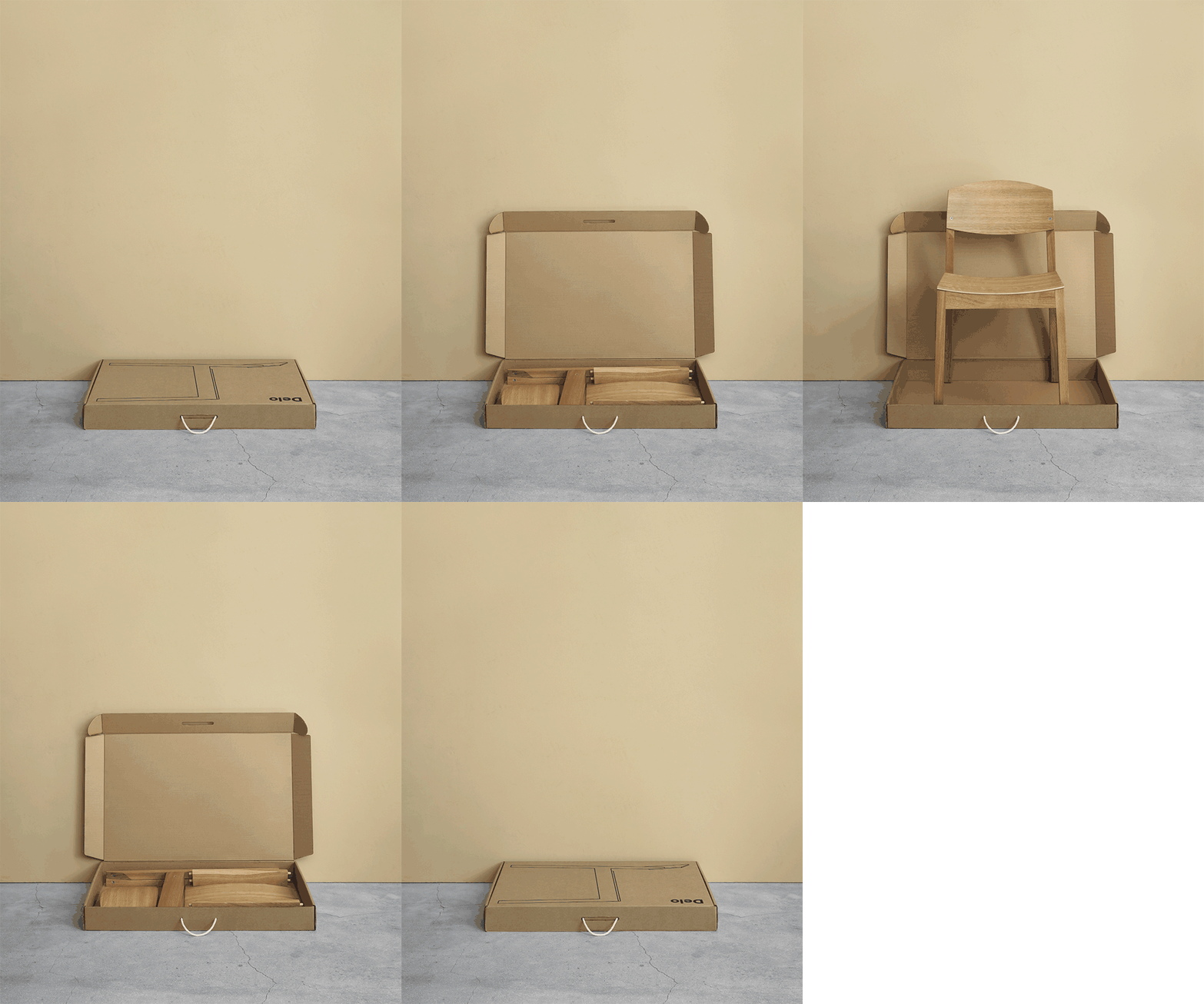
Vietnam’s CNC Manufacturing Advantage: Precision Beats Volume
The critical barrier to flat-pack furniture quality is assembly consistency. A chair back that’s 2mm off-tolerance doesn’t fit properly. A cabinet side that’s miscut renders the entire unit non-functional. Assembly instruction errors create returns, negative reviews, and customer service costs that demolish margins.
Vietnam’s flat-pack manufacturers have solved this through CNC (computer numerical control) precision manufacturing. Rather than hand-cutting components, CNC routers cut wood pieces to tolerances of ±0.5mm, drill pocket holes at exact specifications, and pre-cut all joinery before components ship. The result: assembly that works every time, reducing customer returns by 60-80% compared to hand-cut components.
The logistics advantage is equally critical. CNC precision-cutting also means parts are dimensionally consistent, allowing for more efficient box packing. A typical Vietnam RTA dining set ships in a 1.2 cubic meter box. The same set from competitors requires 1.6-1.8 cubic meters, driving 30-40% higher freight costs per unit.
Certifications matter here too. Vietnam’s major RTA manufacturers hold FSC (Forest Stewardship Council) certification, CARB-2 compliance (California air quality standards), and KCMA (Kitchen Cabinet Manufacturers Association) standards. These certifications are non-negotiable for North American retail chains and premium e-commerce platforms. Competing on price alone while offering certified, precision-manufactured components is a distinct Vietnamese advantage.
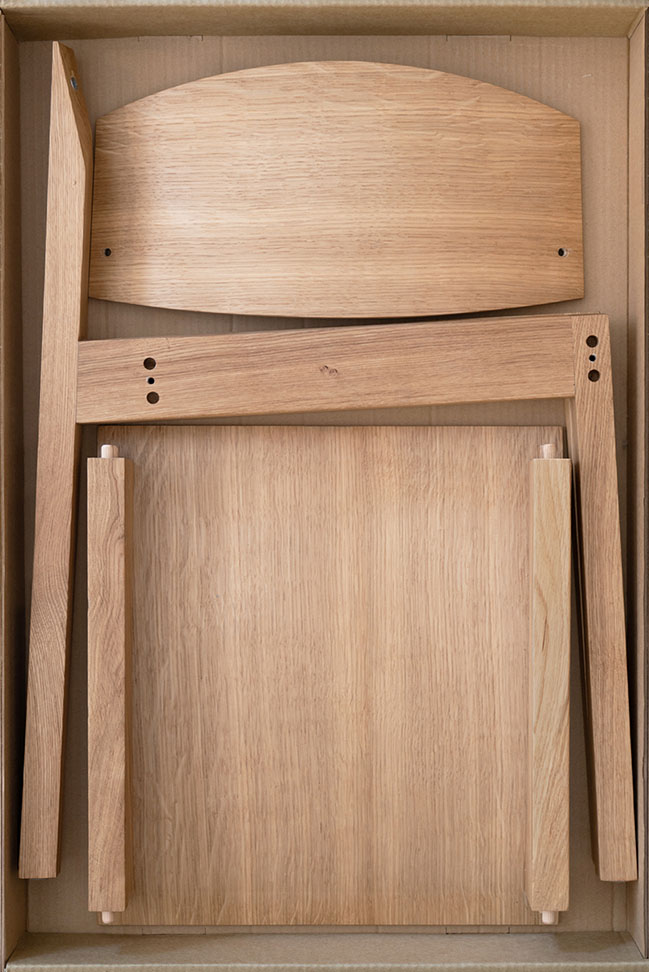
Shipping Logistics: The Hidden Cost Advantage
Container capacity comparison:
A 40-foot container holds approximately 1,100 fully-assembled dining chairs. The same container holds 3,400-3,600 flat-packed dining chairs. That’s a 3x volume multiplier. For an importer shipping 2,000 units, you need 2 containers of assembled furniture or 0.6 containers of flat-pack. The cost difference: $8,000-10,000 per shipment.
Shipping times (Vietnam ports to destination):
Da Nang to US West Coast: 30-35 days (port queue: 2-3 days)
Da Nang to Australia: 5-6 days (port queue: 2-3 days)
Da Nang to North American Regional Distribution Centers (LDC model): 32-37 days, enabling direct dropship to regional fulfillment partners.
The Australia advantage deserves emphasis. At 5-6 days shipping time plus 2-3 day port clearance, a furniture shipment departing Da Nang on Monday morning arrives in Australian ports Wednesday evening. This enables a unique dropship model: receive inventory in Australia, dropship domestically to end customers, and turn inventory 4-5x faster than traditional retail models. For Australian importers, this changes the entire supply chain economics.
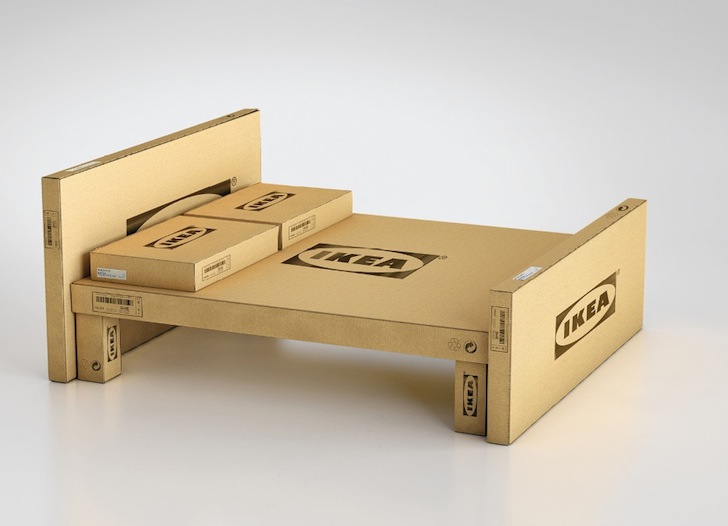
Dropshipping Flat-Pack Furniture: The Margin Multiplier
Traditional furniture retail requires 45-60 days of inventory holding before first sale. You buy, warehouse, and wait. Flat-pack furniture enables a completely different model: direct dropshipping to regional fulfillment centers, with domestic delivery to end customers in 3-5 days.
Capital efficiency example:
Traditional Model: Buy 500 dining chairs, hold for 60 days, sell at $189 retail. Capital invested: $11,000 (500 x $22 FOB). Capital tied up: $11,000 for 60 days.
Dropship Model: Partner with regional fulfillment center holding 200 units for display/backup. Customer orders online, ships from fulfillment center within 48 hours. Replenish inventory every 10-14 days based on actual demand. Capital invested: $4,400 (200 x $22 FOB). Capital tied up: $4,400 for ongoing inventory (no 60-day holding).
Capital efficiency gain: 60% reduction in working capital requirement.
For e-commerce retailers, this is transformative. You can launch 50+ SKUs with $200K in inventory capital instead of $500K. You can test new designs with 100-unit trial runs instead of 500-unit minimum commitments. You can respond to demand signals in real-time instead of forecasting 8-12 weeks in advance.
This is why pure-play e-commerce furniture retailers like Wayfair, Article, and Joybird have aggressively shifted to flat-pack sourcing. They’re not doing it because flat-pack is trendy. They’re doing it because flat-pack transforms the unit economics of their business.
North America Strategy: Tariff Advantage + Dropship Density
North America is the largest RTA furniture market globally. US furniture imports hit $12.3 billion in 2025, with RTA accounting for 35-40% of that volume. Vietnam’s share of US RTA imports is 28% and climbing rapidly.
Why Vietnam wins in North America:
Tariff advantage: Vietnam flat-pack furniture faces ~20% base tariffs. Equivalent China RTA furniture faces 25-35% tariffs, creating an immediate 5-15 percentage point cost advantage before even comparing FOB prices.
Dropship infrastructure: North American fulfillment centers are concentrated in California (Long Beach/Oakland region), Texas (Dallas/Houston), and Georgia (Atlanta area). A furniture shipment arriving at Los Angeles can be cross-docked directly to regional fulfillment centers within 2-3 days. This enables true domestic dropshipping with 3-5 day delivery to end customers.
Pricing power: The combination of lower landed costs + domestic dropship speed + tariff savings means North American importers can undercut traditional assembled furniture retailers by 25-35% while expanding margins. This is particularly valuable in the $150-400 retail price point range, where price sensitivity is highest.
Seasonal advantage: Flat-pack’s lower holding costs mean you can front-load inventory for Q4 holiday season (typically 40% of annual furniture sales) without the working capital pain of assembled furniture sourcing.
Minimum order quantities (MOQs): Vietnam RTA manufacturers have MOQs of 100-300 units per SKU, compared to 300-500 units for China competitors. This enables smaller retailers and e-commerce brands to build product breadth without massive capital commitment.
Australia Strategy: AANZFTA Duty-Free + Ultra-Fast Shipping = Margin Explosion
Australia is the overlooked goldmine for flat-pack furniture sourcing from Vietnam. Two factors create a unique structural advantage: AANZFTA duty-free access and geography.
Duty-free access: Under AANZFTA, 90% of Vietnamese furniture products enter Australia with zero tariffs. For RTA furniture specifically, the rate is essentially zero. Compare this to China (8-12% tariff) or EU (2-5% tariff). That zero-tariff advantage is worth 8-12 percentage points of landed cost immediately.
Shipping speed: Da Nang to Australian ports is 5-6 days. This enables a model that’s impossible with China sourcing: direct dropshipping to Australian regional fulfillment centers with full inventory replacement every 10-14 days.
Example Australian margin model:
FOB Vietnam: $22 (dining chair)
Freight Da Nang to Sydney: $14/unit (5-6 day transit, 80% lower than assembled)
Tariff (AANZFTA): $0
Landed cost: $36/unit
Wholesale price to furniture retailers: $54-60
Retail price: $129-149
Customer satisfaction: High (low price + fast delivery + quality assembly experience)
For Australian importers, this economics are revolutionary. You can build 20-30 SKU range of RTA furniture with $50K inventory and turn inventory 6-8x annually. That’s a $300-400K annual revenue business on $50K in working capital.
Australian retailers like Kmart, Target, and Harvey Norman have all increased Vietnam RTA sourcing dramatically over 2025-2026. They understand the margin math.
Consumer Demand: Price + Convenience is Unstoppable
The consumer-side trend is equally important. Flat-pack furniture has shifted from budget brand positioning to mainstream acceptance. Millennials and Gen Z consumers actively prefer RTA for several reasons: lower price (they stretch furniture budget further), faster delivery (no waiting for custom furniture), and the ability to rearrange/repurpose components (modular appeal).
Assembly time is no longer the barrier it once was. A flat-pack dining chair takes 8-12 minutes to assemble with clear instructions. A cabinet takes 30-45 minutes. For most consumers, this is acceptable—even preferable—versus paying 35% more for the same item fully assembled.
E-commerce has accelerated this acceptance. When a customer sees “Free shipping on orders over $200” and realizes the chair arrives in 3 days because it’s dropshipped domestically (enabled by RTA sourcing), they’re sold. They’re not thinking about assembly time. They’re thinking about price and speed.
This trend is irreversible. RTA furniture has become the default category for growth retailers in North America and Australia.
The Competitive Landscape: Why Vietnam Beats Alternatives
China (28% of RTA imports, declining): Higher tariffs (25-35%), less precision manufacturing, longer lead times from non-coastal provinces, higher shipping costs. Still relevant for very high-volume commodity products, but margin advantage is disappearing.
Vietnam (35% of RTA imports, expanding): Lower tariffs, CNC precision manufacturing, faster shipping, stronger AANZFTA positioning, better MOQ flexibility. The category leader and growing.
India (12% of RTA imports, stable): Lower FOB prices but longer lead times (45-60 days), higher quality variability, limited tariff advantages, poor dropship feasibility due to shipping times.
Indonesia (8% of RTA imports, niche): Relevant for specific product categories (rattan, wood specialty items) but limited scale in mainstream RTA.
Domestic manufacturing (17% of US RTA, premium only): Limited to very high-end designer furniture or specialized products. Cost-prohibitive for mainstream RTA market.
Vietnam’s position is dominant and strengthening.
Production Specs: What to Look for in Vietnam Flat-Pack Partners
Manufacturing capabilities to prioritize:
CNC precision cutting: Tolerance ±0.5mm or better. This is non-negotiable for assembly consistency. Verify manufacturers have multiple CNC routers for redundancy.
Pocket hole joinery: Pre-drilled pocket holes for screwless assembly. This reduces assembly time 20-30% and improves customer experience dramatically.
Pre-finishing: Wood staining, sealing, and packaging-ready finishing. Components should arrive ready to pack, not requiring post-manufacturing operations.
Quality control: Third-party inspection (pre-shipment inspection) is standard. Defect rates should be <1% for RTA furniture (vs. 2-3% for standard assembled imports).
Minimum order quantities: 100 units minimum per SKU is ideal for smaller brands. 150-200 units acceptable. Anything above 300 units limits flexibility.
Lead times: 35-45 days FOB Vietnam is standard. 50+ days suggests production inefficiency or custom manufacturing that drives cost.
Certifications: FSC (Forest Stewardship Council), CARB-2 (California Air Resources Board), and KCMA (Kitchen Cabinet Manufacturers Association) are essential for North American retail. Verify before committing.
The 2026 Playbook: How to Source Flat-Pack Furniture Successfully
1. Choose your geography: North America or Australia? Tariff/shipping economics are different. Design your assortment strategy accordingly.
2. Identify product categories with highest RTA-to-assembled ratio: Dining chairs, bookshelves, storage cabinets, and modular shelving have the strongest margin advantage. Avoid categories where assembly is complex (beds with complex mechanisms, upholstered pieces).
3. Select manufacturing partners with precision credentials: Verify CNC capabilities, certifications, and quality control practices before any commitments. Visit factories if possible.
4. Plan dropship distribution: For North America, identify regional fulfillment partners in California, Texas, and Georgia. For Australia, identify single-port entry (Sydney/Melbourne) with cross-dock capability.
5. Build assortment around 100-unit MOQ flexibility: Small SKU launches let you test demand before committing to larger orders. RTA’s lower capital requirement makes this possible.
6. Invest in assembly content: Clear instructions, video tutorials, and customer support reduce returns and build brand loyalty. This is where RTA quality is made or broken.
7. Price aggressively: Your landed cost advantage is 40-50% vs. assembled competitors. Pass 20-30% of that savings to customers through pricing. Use the remaining margin for marketing, operations, and growth.
Bottom Line: Flat-Pack Furniture is the Future of Retail
Inflation is real. Shipping costs are rising. Consumer price consciousness is at historic highs. Traditional assembled furniture sourcing models are broken.
Vietnam flat-pack furniture offers something almost unprecedented in retail: a 40-50% landed cost advantage plus better margins than competitors. Not through race-to-bottom pricing or quality compromises. But through structural manufacturing advantages (CNC precision, certifications, expertise), geographic advantages (shipping times, tariff treaties), and business model advantages (dropship efficiency, capital requirements).
For importers willing to embrace RTA, 2026 offers a once-per-decade opportunity: build a significant furniture business with dramatically lower working capital, faster inventory turns, and margins competitors can’t match.
That’s not incremental improvement. That’s transformation.
If your product mix extends beyond flat-pack into solid wood pieces, How to Find Furniture & Wood Manufacturers in Vietnam covers sourcing across both categories.
Ready to source flat-pack furniture from Vietnam? Vietnam Direct Sourcing specializes in flat-pack and RTA furniture sourcing from Central Vietnam manufacturers. We identify precision CNC partners, negotiate MOQs suited to your scale, manage quality control, and coordinate dropship distribution to North America and Australia. Our team understands the economics, certifications, and logistics that make RTA furniture profitable.
Connect with us to build your flat-pack furniture business in 2026.
Tags: flat-pack furniture sourcing | vietnam furniture manufacturer | CNC furniture components vietnam | ready-to-assemble furniture supplier | DIY furniture wholesale vietnam | RTA furniture china alternative | knock-down furniture logistics
Not sure where to start? See how our Vietnam sourcing solutions work, from supplier identification to quality assurance.
Learn more about this topic on our podcast!
Want to dive deeper into this subject? Check out our latest podcast on this subject on Spotify, where we explore this topic and so much more! Whether you're on the go or relaxing at home, tune in for insights, tips, and discussions that bring our blog topics to life.




2026 Sourcing Outlook: Why Vietnam is Your Hedge Against Global Energy Shocks

Leave a comment
Your email address will not be published. Required fields are marked *